Welcome to the September 2025 newsletter!
Please contact info@ammnet.org if you would like to contribute any items to next month’s newsletter.
Register for the AMMnet Monthly Seminar
October 7, 2025, 15 hr UTC
Childhood Malaria Trends in Northern Ghana: Evidence of Impact from Seasonal Malaria Chemoprevention.
Presenter: Abdulzeid Yen Anafo
This presentation explores how Seasonal Malaria Chemoprevention (SMC) has shaped childhood malaria outcomes in northern Ghana where malaria transmission is highly seasonal and children remain at greatest risk. Drawing on nationally representative survey data and epidemiological analysis, the talk connects program implementation to real-world reductions in malaria prevalence, highlighting both direct protective effects and sustained benefits beyond the treatment period. The session emphasizes that SMC not only reduces infection risk but also demonstrates differential impacts across child age groups, with the youngest children experiencing the greatest gains. By linking evidence on intervention effectiveness to broader public health goals, the presentation offers practical insights for policymakers and health partners on how SMC can be optimized through expanded coverage and alignment with local transmission patterns to strengthen child survival strategies in high-burden settings.
Bio:
Abdulzeid Yen Anafo is a mathematician specializing in health statistics, mathematical modeling, and public health research. He is currently a Lecturer at the University of Mines and Technology, Ghana. He earned his Ph.D. in Mathematics from the University of Mines and Technology, an MSc in Mathematical Sciences from the African Institute for Mathematical Sciences (AIMS), and a BSc in Mathematical Sciences from the University for Development Studies, Ghana. Prior to his academic appointment, Abdulzeid served as a Health Statistician at Ghana’s Ministry of Health, where he contributed to data analysis and the evaluation of health interventions. He is also a former postdoctoral fellow with the West Africa Mathematical Modelling Capacity (WAMCAD) program. His current research focuses on mathematical modeling, statistical distribution theory, and the application of machine learning in health.
Registration notice:
Please note that the seminar is scheduled to begin at 15:00 UTC. To ensure all attendees attend at the correct time, if the Zoom invite doesn't reflect the correct start time upon registration, then please notify us at info@ammnet.org and manually update the time to 15:00 UTC. We appreciate your understanding and cooperation.
PSA: Real-time interpretation to French and Portuguese will be available.
Register Here for the Seminar Series
Share Your Input: Help shape AMMnet's future trainings!
The AMMnet Learning Committee is exploring ways to connect members with training opportunities that best support professional growth and community needs.
To guide this effort, we’d like to hear from you about the areas you find most valuable.
Whether you’re looking to strengthen your own skills or would be interested in contributing as a trainer or co-facilitator, your input will help us identify and prioritize opportunities. Some of the areas we’re considering include:
- Data Manipulation
- Data Visualization
- Best Practices for Reproducible Code
- Statistical Tests & Models
- Dynamic Modelling (Theory & Simulation)
- Inference / Parameter Estimation
- Genomics
- Health Economics
- AI & Machine Learning
- Soft Skills
Please take a few minutes to share your input by September 22, 2025, 11:59 GMT. Your feedback will help the Learning Committee identify the most relevant training opportunities for our community.
Thank you for helping us strengthen learning across the AMMnet community!
Take the Training Needs Assessment Here
Register for the next Hackathon!
Cleaning and standardizing geographic names in R with sntutils::prep_geonames()
Date: Wednesday, September 24
Time: 11:00 GMT
Instructor: Mohamed Yusuf, PhD, Technical Advisor with AHADI and Data Scientist and Epidemiologist at the World Health Organization's African Regional Office, Nairobi, Kenya
About the session
This hands-on session will show how to use sntutils::prep_geonames() to clean and standardize administrative names in a structured, reproducible way. The workflow combines automated string-distance matching with an interactive review process to resolve mismatches, applies hierarchical keys to preserve geographic relationships, and saves corrections to a reusable cache for future use. Participants will learn how to run the function in both interactive and non-interactive modes, merge new corrections with existing ones, generate match statistics by administrative level, and integrate the process into broader R-based analytical pipelines. We will conclude with validation using targeted visualisation steps to check accuracy before finalising the workflow. The approach will be demonstrated with real-world datasets.
All experience levels are welcome! Register at the link below.
All registered participants should expect to receive an email with the session materials and downloads by the week of September 15, a week prior to the hackathon.
The session will be recorded and made publicly available to all AMMnet members via the hackathon blog.
Register Here for the Hackathon
Find the AMMnet Hackathon blog here
French-Speaking Members, Register for the next Hackathon on Mapping in R, en français !
Date: Tuesday, October 28
Time: 12 hr UTC
Trainer: Ousmane Diao, PhD, Senior Research Scientist at the Malaria Atlas Project (MAP) East Africa node, Ifakara Health Institute, Dar es Salaam, Tanzania
About the session: Join us for the next AMMnet Hackathon session, which will focus on mapping in R. You will learn how to create publishable interactive maps using shapefiles. During this two-hour session, we will introduce key GIS concepts and explore the sf and tmap packages to develop compelling map visualizations.
This will be an interactive session, led in French, with sample data, code, and exercises.
We will build on lessons learned from the previous two hackathons on data visualization and processing. We recommend exploring those if you have time! You can find them on our blog by clicking this link.
All levels of experience are welcome! Register by clicking on the link below.
All registered participants will receive an email containing the session documents and downloads during the week of October 13, before the hackathon.
The session will be recorded and made available to all AMMnet members via the hackathon blog.
We invite teachers of other languages to lead sessions. If you would like to lead a session in English, French, or Portuguese, please contact info@ammnet.org.
Register Here for the Hackathon
Meet-the-Modelers: Call for Volunteers!
Thank you to our recent presenter, Roseric Azondekon, and to all who have shared their backgrounds and professional experience in past seminars!
Want to introduce yourself with a quick 2-minute lightning talk at an upcoming AMMnet monthly seminar?
A great opportunity to:
- Showcase your work
- Gain visibility
- Connect with peers
Interested?
Click on the link below to sign up!
Fill out the Meet-the-Modeler Interest Form Here
Thank you for voting!
Susan Rumisha and Antonio Nkondjio to continue serving on the AMMnet Board.
We are grateful for their leadership and excited for their continued contributions.
Susan F. Rumisha
Susan Rumisha envisions a growing SSA community of experts collaborating to translate analysis into policy and impact, strengthening both individual skills and institutional systems.
Antonio Nkondjio Christophe
Antonio Nkondjio is dedicated to advancing AMMnet’s growth and recognition through impactful research, leadership, and activities addressing critical health challenges.
Have news, events or resources to share?
Use AMMnet’s Social Media Request Form!
Click on the link below to submit your request, and we’ll consider your post for Facebook, X, Bluesky, and LinkedIn.
Find the Social Media Posting Request Form Here
Job Opportunities
Penn State University Full or Associate Professor Position in Infectious Disease Modeling Available
The Pennsylvania State University is seeking a Full or Associate Professor in Infectious Disease Modeling to support the mission of the Center for Infectious Disease Dynamics (http://cidd.psu.edu/) of the Huck Institutes of the Life Sciences. This is a cross-University search, and the position will be appointed in a department and College that is appropriate for the research and teaching program of the candidate.
Successful candidates are expected to have an established track record of successful extramural funding, published results from multidisciplinary research projects, and evidence of leadership of multidisciplinary scientific teams. They will be expected to contribute to the Center leadership through participation on the Executive Committee and development of research, training, and/or outreach initiatives. The Department and College tenure home is open for negotiation based on research interests and could be in one or more of the following colleges: College of Agricultural Sciences, College of Engineering, College of Health and Human Development, College of Liberal Arts, College of Medicine, and the Eberly College of Science. There is an expectation that the candidate will join the faculty of one of the Huck Institute’s six Interdisciplinary Graduate Degree Programs.
Find more information and apply here
National University of Singapore Research Fellow
NUS is seeking a Research Fellow to join a new group within the Centre for Epidemic Research and Modelling (CERM) at Saw Swee Hock School of Public Health at the National University of Singapore (NUS) led by Professor Azra Ghani.
You will lead research in the development and application of within-host mathematical models to understand the long-term dynamics of natural- and vaccine-induced immunity to pathogens. You will be responsible for developing a suite of within-host mathematical models of that can be used to test hypotheses regarding the durability of acquired immunity through natural infection, vaccination or in combination (i.e. hybrid immunity).
This new project forms part of a wider multi-country collaborative initiative that is seeking to develop novel, high-throughput immunological assays to improve surveillance of spillover of viral families of pandemic potential. This includes teams from Singapore (NUS, Duke-NUS, EBI/A*Star), Vietnam (Oxford University Clinical Research Unit, National Institute of Hygiene & Epidemiology), Cambodia (Institut Pasteur) and the UK (University of Oxford & Imperial College London).
You will work closely with the modelling team in this initiative at NUS (directed by Dr Hannah Clapham) and at Imperial College London / Imperial Global Singapore (directed by Professor Azra Ghani).
The anticipated start date is 1st October 2025 onwards.
Find more information and apply here
Northeastern University Postdoctoral Research Associate Position Available
The lab of Prof. Michael Johansson in the Network Science Institute and Bouvé College of Health Sciences is seeking applications for a postdoctoral research associate to work at the intersection of epidemiology, complex systems, network science, and applied public health.
Find more information and apply here
Stony Brook University Assistant Professor Position Available in the Department of Ecology and Evolution
The Department of Ecology and Evolution at Stony Brook University invites applications for a tenure-track position in Global Change and Disease Ecology. This position is designed to address the critical intersection of global change, infectious disease dynamics, and public health—an area of increasing importance in addressing global challenges. The focus of this position is to advance understanding of how global change, including changes in climate, land use, biodiversity loss and homogenization, urbanization, and global trade, influence host-pathogen dynamics, vector ecology, and zoonotic spillovers. The faculty member hired for this position will bring expertise in advanced quantitative approaches, including ecological or evolutionary modeling, genomics, or advanced computation (e.g., machine learning, deep learning, neural networks), to develop predictive frameworks for understanding and mitigating the effects of global change on disease ecology.
Find more information and apply here
UC Berkeley School of Public Health Postdoctoral Scholar Positions Available
The Pandemic & Epidemic Threat Analysis Lab (PETAL) here at UC Berkeley is recruiting.
Role: Work closely with Prof Charles Whittaker and the PETAL team to co-create a quantitative research program that reduces pandemic risk. Current projects centre on viral epidemiology, medical countermeasures (esp. broad-spectrum vaccines/antivirals), and genomic surveillance systems (especially wastewater & metagenomic approaches) with scope to expand or diversify based on the candidate's interests. PETAL is a friendly, welcoming, international group - we work in an open-science, globally collaborative way, and the role will involve a lot of opportunities for international travel, conference attendance and broader professional growth.
Timing: Final application deadline is Monday, October 6, 2025 (11:59pm PT). Applicants can ignore the system “review by Sep 4” date—we won’t use it. The start date is flexible (October 2025 is a placeholder).
Find more information and apply here
Courses and Learning Opportunities
Sunday Weekly Course: Data Analysis and Visualization Using R
Join us every Sunday for a virtual course series on Data Analysis and Visualization Using R, led by Shakira Babirye (Biostatistician/Data Scientist, Infectious Diseases Research Collaboration).
📅 When: Sundays, 7:00–8:00 AM (GMT+3, East African Time)
📍 Where: AMMnet Zoom (link provided upon registration)
👩🏽🏫 Instructor: Shakira Babirye
✉️ To Join: Email Shakira at bbrshakira@gmail.com to receive the Zoom link.
Recordings of previous sessions are available on the AMMnet YouTube channel (link below)
AMMnet YouTube Channel-Course Recordings
Applications are now open for the 2025 AREF Excell Malaria Researcher & Leadership Development Programme
AREF’s Excell malaria programme will enable 18 individual researchers from three participating institutions to build strong research careers, empower excellent teams, win research funds, work collaboratively, engage with research users – and so make an even bigger impact on improving health and saving lives.
Eligibility Requirements
- An employee of an African institution with a significant and specific role in Malaria research.
- A national of an African state
- 2-8 full years of active post-PhD research experience; or a clinician without a PhD with both an MD and research master’s and 4-8 years of active research experience.
- Not already having participated in previous Excell programme.
- AREF is keen to recruit talented researchers focusing on malaria research from a broad range of approaches, including laboratory, clinical, behavioural, social, public health, health systems, and environmental and mathematical sciences. Their research must be directed towards achieving better health outcomes in Africa and show alignment with their national Malaria research strategy, where applicable.
Application Deadline: 15th October, 2025
Click here for more information!
MIDAS Webinar Series - September
Topic: epymorph: A comprehensive, open-source software for building, simulating, fitting, and forecasting spatial models of infectious disease
Speaker: Joseph Mihaljevic, PhD
When: Friday, September 26, 1:00 - 2:00pm EDT
Abstract: The epymorph Python package provides a framework for completing the full lifecycle of a metapopulation modeling study, from construction to parameter fitting to forecasting. epymorph is a highly customizable yet reproducible modeling platform, facilitating the creation of spatial models for any set of US Census-delineated areas, down to the Census block group. An advanced particle filtering system estimates space- and time-varying parameters from real surveillance data, and fitted models can then be piped into a flexible forecasting module. We believe that epymorph is a state-of-the-art tool for building and testing models to support real challenges in public health.
Bio: Joe Mihaljevic is an Associate Professor at Northern Arizona University’s School of Informatics, Computing, and Cyber Systems (SICCS), and he is an affiliate researcher at NAU’s Pathogen and Microbiome Institute, as well as the Center for Community Health and Engaged Research. Research in Mihaljevic’s lab integrates across disciplines to understand the dominant drivers of pathogen transmission, with applications in wildlife conservation and public health. Grounded in epidemiological theory, they develop statistical computing techniques to rigorously link mechanistic models with diverse data sources, and they develop collaborative cyberinfrastructure to operationalize modeling techniques for real world applications.
Workshops and Conferences
Register for the 2025 ASTMH Annual Meeting | November 9-13 in Toronto Canada
American Society of Tropical Medicine & Hygiene (ASTMH) will be holding its annual meeting from November 9 -13, 2025 at the Metro Toronto Convention Centre. Find more information below!
MIDAS Trainee Network to Host Workshop on How to Write a Strong Manuscript
Having trouble putting your research into effective words, or refining your latest draft? Join the MIDAS Trainee Network for the third workshop in our Research Storytelling Series: How to Write a Strong Manuscript.
Date: Thursday, September 25, 12PM ET
Speaker: Dr. John Drake (Regents' and Distinguished Professor at the University of Georgia)
Registration: Click on the link below to register!
To start, Dr. Drake will open the event with a brief presentation on the manuscript writing process. Then, we will shift gears to a discussion and Q+A. Everyone has room to improve their manuscript writing – we hope to see you there!
Subgroups, Working Groups, and Regional Activities
AMMnet currently has four established local chapters.
If you would like to be connected with local chapters in Cameroon, Liberia, Uganda or Zambia, you may send email using the respective addresses below.
- AMMnet Uganda Chapter, ammnetuganda@gmail.com
- Applied Malaria Modeling Network Zambia, ammnetzambia@gmail.com
- AMMnet Liberia Chapter, ammnet.liberia@gmail.com
- AMMnet Cameroon Chapter, ammnetcameroon@gmail.com
And two new local chapters under review – Burkina Faso and Tanzania!
Establish an AMMnet Local Chapter to Strengthen Malaria Modeling and Analytics in Your Region
AMMnet’s Local Chapters bring together modelers, analysts, scientists, public health professionals, partner institutions and civil society, to work together locally to adopt common approaches to improve the use of modeling and analytics for controlling and eliminating malaria whilst reflecting the mission of global AMMnet.
Establishing a local AMMnet chapter is a three-step process:
- Pre-registration with global AMMnet
- A completed Local Chapter Establishment Application Form
- AMMnet Board approval with guidance from the Local Chapter Development Task Force
If you are an AMMnet member and you are interested in establishing a local chapter, please refer the information and guidelines found at the link below.
If you have any questions, considerations or suggestions for establishing local AMMnet chapters, please send us an email at info@ammnet.org.
20 AMMnet local chapters are in the process of establishment. Refer to the list of those local chapters below and their stage of establishment.
Local Chapters with Establishment in Process
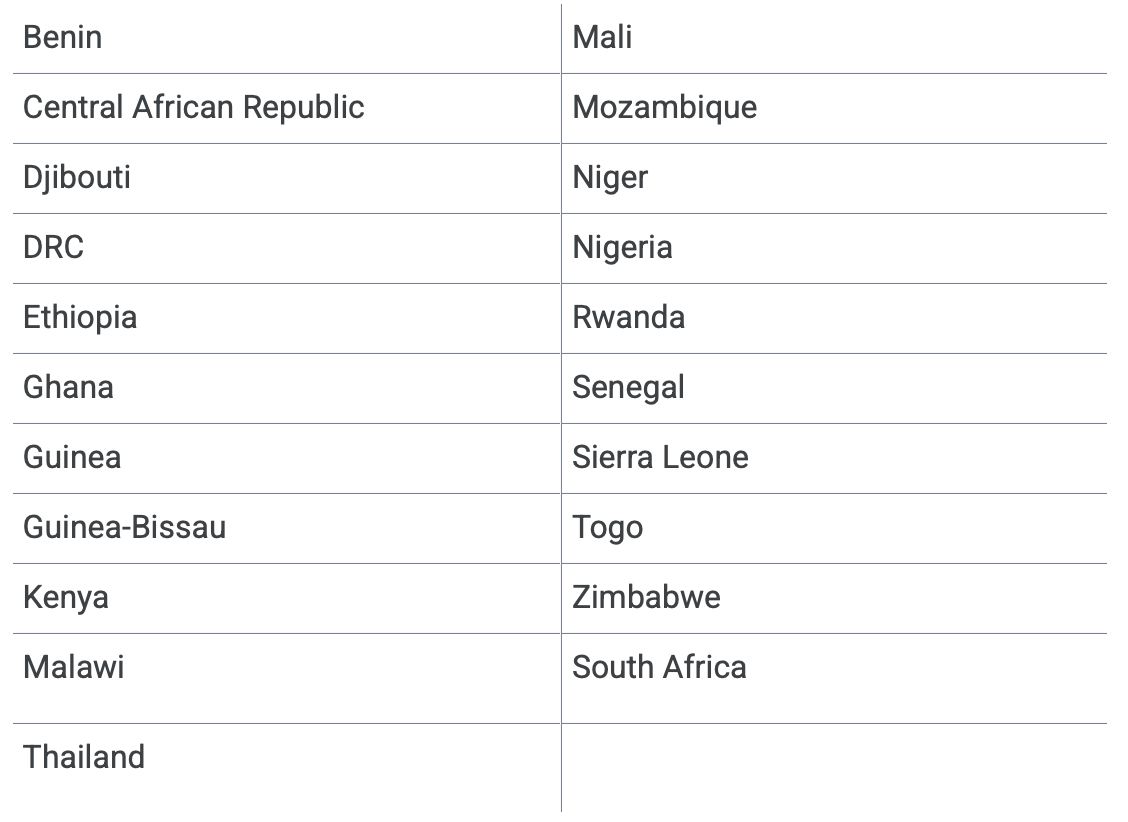
Send an inquiry to info@ammnet if you feel your local chapter has not been included by mistake or if you wish to be connected with a local chapter contact. info@ammnet if you feel your local chapter has not been included by mistake or if you wish to be connected with a local chapter contact.
Local Chapter Information & Guidance
Member Reading Corner
If you'd like to share a paper or any other publication with the AMMnet community, send an email to info@ammnet.org and we will consider including it in the newsletter.
Seminar Recap and Recordings
AMMnet Seminar Series
September 5, 2025, 15 hr UTC
Modelling to Inform Malaria Vaccine Policy: Supply and Equity as Key Factors
Prof. Muktar Gadanya, Chair of Nigeria’s NITAG, highlighted how modeling can guide malaria vaccine policy in Nigeria, where malaria causes around 100 million cases and 300,000 deaths annually. While existing interventions like insecticide-treated nets and seasonal chemoprevention remain vital, modeling shows vaccines could significantly reduce under-five mortality and severe malaria when used in combination with other measures. With supply constraints and costs varying between RTS,S and R21, Nigeria plans to introduce vaccines for children from 5 months in high-burden regions, integrating them into routine immunization. Prof. Gadanya emphasized that success will depend on strong data, equitable access, and careful alignment with existing malaria control strategies.
You may find a link to the English, French, and Portuguese on our YouTube channel.