Welcome to the October 2025 newsletter!
Please contact info@ammnet.org if you would like to contribute any items to next month’s newsletter.
Register for the AMMnet Monthly Seminar
November 4, 2025, 15 hr UTC
Mathematical Model of Malaria Dynamics in Case of Wetlands
Presenter: Walle Tilahun Alemu
This presentation delves into an eco-epidemiological model designed to unravel the complex dynamics of malaria transmission in wetland environments. We extend the classic Ross-Macdonald framework by explicitly incorporating larval mosquito dynamics, predator-prey interactions, and a hydrological ”wetness index.” Through stability analysis and numerical simulation, we derive a novel expression for the basic reproduction number (R0) that captures the critical balance between wetland productivity and natural biological control. Our findings identify key ecological thresholds and demonstrate how seasonal hydrological patterns drive malaria incidence. The model serves as a virtual laboratory, generating synthetic epidemiological data (epidata) to test intervention strategies, such as the targeted use of larvivorous fish, providing a quantitative framework for sustainable malaria control in these ecologically sensitive regions
About the presenter:
Walle Tilahun Alemu is a dedicated Lecturer and Researcher in the Department of Mathematics at Debre Markos University, Ethiopia, with a strong background in applied mathematics. He holds an MSc in Mathematics (Differential Equations) from Debre Markos University and his research interests include numerical analysis, differential equations, and mathematical modeling. Mr. Tilahun has contributed to the field through publications in reputable journals, including a recent study on the fractional biochemical reaction model published in the International Journal of Applied and Computational Mathematics. He is an active researcher and has experience as a keynote speaker, sharing his insights at academic collaborations between universities.
Registration notice:
Please note that the seminar is scheduled to begin at 15:00 UTC. To ensure all attendees attend at the correct time, if the Zoom invite doesn't reflect the correct start time upon registration, then please notify us at info@ammnet.org and manually update the time to 15:00 UTC. We appreciate your understanding and cooperation.
USA-based members: Please note that despite daylight change, the seminar will continue to take place at 15:00 UTC. Please take into account the one-hour time difference.
PSA: Real-time interpretation to French and Portuguese will be available.
Register Here for the Seminar Series
Register for the Francophone Seminar!
Integrating local data into malaria transmission models
🗓️ Thursday, October 30, 2025
🕐 1:00 p.m. GMT
🎙️ Presenters: Dr. Mady Cissoko (PNLP, Mali) and Dr. André Dembélé (Modeler, EMOD – FE Thiès)
Please note that this seminar will be in French.
This session will highlight the essential role of local data in strengthening modeling, decision-making, and strategic planning in the fight against malaria.
Our speakers will share their real-world experiences and practical approaches on how field-based information can enrich transmission models and support more effective control strategies.
About the presenters:
Dr. Mady Cissoko is a Malian public health professional specializing in epidemiology and spatiotemporal analysis. A researcher at the Malaria Research and Training Center (MRTC) and Head of the Prevention and Case Management Division at Mali's National Malaria Control Program (PNLP) since 2022, he plays a key role in the planning, implementation, and evaluation of national interventions.
His work focuses on malaria stratification and targeting, as well as impact assessment based on routine data (DHIS2). An expert in analysis and mapping tools (R, QGIS), he is also actively involved in training and operational research, helping to strengthen the PNLP's capacity to accelerate malaria elimination.
Dr. André Dembélé holds a doctorate in operational research and optimization and is a professor and researcher at the Institute of Mathematics and Physical Sciences (IMSP) in Benin. He is also an associate trainer for the capacity-building program for malaria modelers in West Africa (University of Thiès/Northwestern University).
A specialist in quantitative modeling and optimization, he works to translate scientific rigor into high-impact operational decisions to strengthen the resilience of health systems in the face of epidemic and climate shocks. His approach integrates heterogeneous data (epidemiological, climatic, and geospatial) with agent-based simulation, machine learning, and spatio-temporal analysis. Committed to skills transfer, he develops tailor-made tools to support strategic planning.
Register Here for the French Seminar
Register for the Panel on Building a Successful Career in Modeling
📅 Tuesday, November 26 | 🕒 15:00 UTC | 💻 Virtual (Zoom)
Join us for an inspiring 90-minute panel discussion on advancing your career as a modeler. Hear from experienced professionals as they share strategies for defining your career path, pursuing funding and grant opportunities, and developing the skills and connections needed for long-term success.
This event is hosted by the AMMnet Career Development Committee as part of its ongoing efforts to support professional growth within the modeling community.
Don’t miss this opportunity to gain practical insights and guidance for building a thriving career in applied modeling!
Register Here to Attend the Virtual Panel Discussion
French-Speaking Members: Register for the next Hackathon on Mapping in R, en français!
Date: Tuesday, October 28
Time: 12 hr UTC
Trainer: Ousmane Diao, PhD, Senior Research Scientist at the Malaria Atlas Project (MAP) East Africa node, Ifakara Health Institute, Dar es Salaam, Tanzania
About the session: Join us for the next AMMnet Hackathon session, which will focus on mapping in R. You will learn how to create publishable interactive maps using shapefiles. During this two-hour session, we will introduce key GIS concepts and explore the sf and tmap packages to develop compelling map visualizations.
This will be an interactive session, led in French, with sample data, code, and exercises.
We will build on lessons learned from the previous two hackathons on data visualization and processing. We recommend exploring those if you have time! You can find them on our blog by clicking this link.
All levels of experience are welcome! Register by clicking on the link below.
Please note that this hackathon will be in French.
The session will be recorded and made available to all AMMnet members via the hackathon blog.
We invite instructors of other languages to lead sessions. If you would like to lead a session in English, French, or Portuguese, please contact info@ammnet.org.
Register Here for the Hackathon
Missed our hackathon on Cleaning and Standardizing Geographic Names in R?
No worries—you can catch up on the AMMnet Hackathon blog!
👉 Watch the session recording
👉 Find all materials, links, and packages you need
👉 Learn at your own pace
Access all the previous hackathons here!
Meet-the-Modelers: Call for Volunteers!
Thanks to Roseric Azondekon and all past presenters for sharing your backgrounds and professional experience!
Want to introduce yourself with a quick 2-minute lightning talk at an upcoming AMMnet monthly seminar?
A great opportunity to:
- Showcase your work
- Gain visibility
- Connect with peers
Interested?
Click on the link below to sign up!
Fill out the Meet-the-Modeler Interest Form Here
Have news, events or resources to share?
Use AMMnet’s Social Media Request Form!
Click on the link below to submit your request, and we’ll consider your post for Facebook, X, Bluesky, and LinkedIn.
Find the Social Media Posting Request Form Here
Job Opportunities
PhD and Postdoc Opportunities Available at UC Berkeley and UCSF
Our research lab at UC Berkeley and UCSF is accepting PhD applications for Fall 2026 as well as Postdoc positions to start as soon as possible. Our research focuses on developing machine learning and AI methods for healthcare applications. We are affiliated with the UC Berkeley/UCSF Computational Precision Health (CPH) program, as well as the EECS and Statistics departments at UC Berkeley. Our lab is also affiliated with the Berkeley AI Research (BAIR) Lab and the Center for Targeted Machine Learning and Causal Inference (CTML). Interested students and Postdoc are encouraged to apply through the CPH, EECS or Statistics departments.
Find more information and apply here
University of Montreal Doctorate (Ph.D.) in Public Health, Doctoral scholarship offer
The SAPRIME (Primary Health Care, Globalization, Equity) research laboratory is looking for a doctoral student (Ph.D.) to complete a graduate thesis as part of a project on malaria vaccination in young children in sub-Saharan Africa (ICEVIAP project).
ICEVIAP is a multidisciplinary project that combines mixed methods to examine the implementation, coverage, and effects of the vaccination campaign. The study will take place in Burkina Faso and Burundi and will require the collection of primary data from a cohort of children living in rural areas. The research project will last four years and is funded by the Canadian Institutes of Health Research (CIHR).
Students must be admitted to the doctoral program in public health (epidemiology or global health option) at the Université de Montréal to be eligible for the scholarship.
A letter confirming financial support from the laboratory, conditional on admission to the doctoral program, may be provided in support of the application.
Courses and Learning Opportunities
Sunday Weekly Course: Data Analysis and Visualization Using R
Join us every Sunday for a virtual course series on Data Analysis and Visualization Using R, led by Shakira Babirye (Biostatistician/Data Scientist, Infectious Diseases Research Collaboration).
📅 When: Sundays, 7:00–8:00 AM (GMT+3, East African Time)
📍 Where: AMMnet Zoom (link provided upon registration)
👩🏽🏫 Instructor: Shakira Babirye
✉️ To Join: Email Shakira at bbrshakira@gmail.com to receive the Zoom link.
Recordings of previous sessions are available on the AMMnet YouTube channel (link below)
AMMnet YouTube Channel-Course Recordings
WHO Academy's Malaria: Harnessing the power of routine health facility data
The WHO Global Malaria Programme (GMP) launched the Global Technical Strategy for Malaria (GTS) 2016-2030 in 2016. The GTS recognizes the urgent need to address weaknesses in surveillance, monitoring, and evaluation. "Transform malaria surveillance into a core intervention” is a key pillar of the strategy. Strengthening surveillance systems, as well enhancing the use of data for decision making are core components of Pillar 3.
Since the launch of the GTS, the GMP has developed a set of data standards, tools, and curricula materials to support countries to strengthen and monitor surveillance systems, and to support use of data for decision-making in all transmission settings.
Key resources include
- Malaria Surveillance, Monitoring and Evaluation Manual,
- Malaria Surveillance Assessment Toolkit and
- Standardized District Health Information System 2 (DHIS2) malaria modules.
Alongside these resources, this course will enhance your ability to review and analyse malaria indicators recorded and reported at health facilities and interpret findings for effective decision-making and action-planning in malaria endemic countries.
Enroll by June 30th, 2026.
Watch the recorded APMEN malaria webinar "Prevention of Re-establishment of Malaria Transmission: Global Guidance"
Countries that have eliminated malaria—or are nearing elimination—face the ongoing threat of importation and resurgence of local transmission, particularly in the context of population movement, weakened surveillance, climate change, and health system challenges. In response to these risks, the World Health Organization (WHO) recently released the Prevention of Re-establishment of Malaria Transmission: Global Guidance, which provides critical technical direction for near- and post-elimination settings, as well as those at high risk of re-establishment.
To support dissemination and country-level implementation, WHO and APMEN co-hosted a high-level webinar to introduce the POR guidance and share country experiences.
Workshops and Conferences
Register for the 2025 ASTMH Annual Meeting | November 9-13 in Toronto Canada
American Society of Tropical Medicine & Hygiene (ASTMH) will be holding its annual meeting from November 9 -13, 2025 at the Metro Toronto Convention Centre. Find more information below!
Subgroups, Working Groups, and Regional Activities
Congratulations to the latest established local chapter, AMMnet Tanzania Chapter!
AMMnet currently has five established local chapters.
If you would like to be connected with local chapters in Cameroon, Tanzania, Liberia, Uganda or Zambia, you may send email using the respective addresses below.
- AMMnet Uganda Chapter, ammnetuganda@gmail.com
- Applied Malaria Modeling Network Zambia, ammnetzambia@gmail.com
- AMMnet Liberia Chapter, ammnet.liberia@gmail.com
- AMMnet Cameroon Chapter, ammnetcameroon@gmail.com
- AMMnet Tanzania Chapter, ammnettz@gmail.com
And one new local chapter under review – Burkina Faso!
Establish an AMMnet Local Chapter to Strengthen Malaria Modeling and Analytics in Your Region
AMMnet’s Local Chapters bring together modelers, analysts, scientists, public health professionals, partner institutions and civil society, to work together locally to adopt common approaches to improve the use of modeling and analytics for controlling and eliminating malaria whilst reflecting the mission of global AMMnet.
Establishing a local AMMnet chapter is a three-step process:
- Pre-registration with global AMMnet
- A completed Local Chapter Establishment Application Form
- AMMnet Board approval with guidance from the Local Chapter Development Task Force
If you are an AMMnet member and you are interested in establishing a local chapter, please refer the information and guidelines found at the link below.
If you have any questions, considerations or suggestions for establishing local AMMnet chapters, please send us an email at info@ammnet.org.
24 AMMnet local chapters are in the process of establishment. Refer to the list of those local chapters below and their stage of establishment.
Local Chapters with Establishment in Process
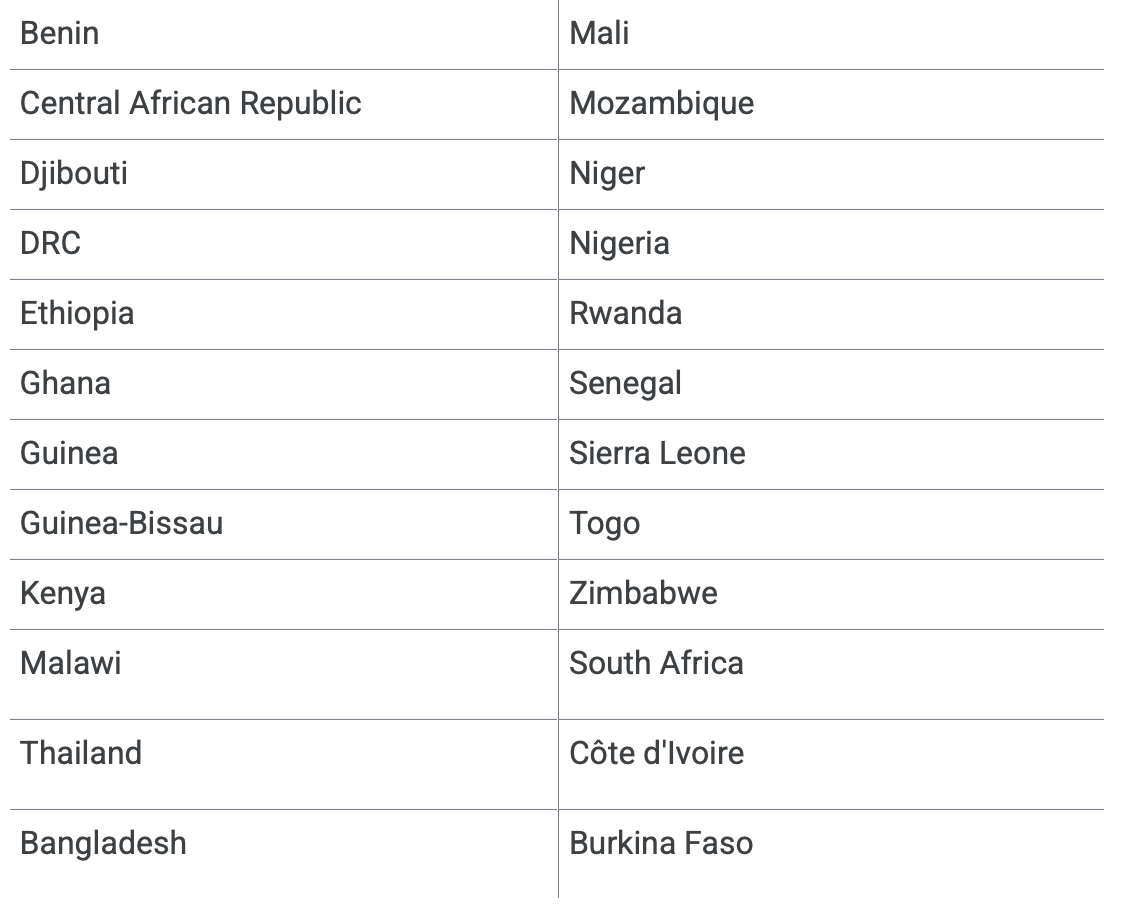
Send an inquiry to info@ammnet if you feel your local chapter has not been included by mistake or if you wish to be connected with a local chapter contact. info@ammnet if you feel your local chapter has not been included by mistake or if you wish to be connected with a local chapter contact.
Local Chapter Information & Guidance
Member Reading Corner
If you'd like to share a paper or any other publication with the AMMnet community, send an email to info@ammnet.org and we will consider including it in the newsletter.
Introducing researchers involved in vector control to modelling for operational decision-making in Benin: report of the workshop, January 17–18, 2024
We’re proud to share the latest publication from keller Alphonse KONKON, an AMMnet member and past Small Event Awardee, in Malaria Journal:
“Introducing researchers involved in vector control to modelling for operational decision-making in Benin.”
https://doi.org/10.1186/s12936-025-05561-w
This article highlights a workshop held in Benin on January 17–18, 2024, organized with the financial and technical support of AMMnet. The workshop aimed to build the capacity of malaria control stakeholders in data analysis and modelling for operational decision-making — advancing evidence-based approaches to malaria control.
Forecasting malaria incidence in the Southeast districts of Senegal using a machine learning approach
This new open-access paper explores how machine learning can forecast malaria incidence across southeastern Senegal — offering powerful insights for early warning and targeted control.
📖 “Forecasting malaria incidence in the Southeast districts of Senegal using a machine learning approach”
👉 https://link.springer.com/article/10.1186/s44398-025-00007-4
A great example of how data science and public health can come together to support malaria elimination efforts.
WHO'S Subnational tailoring of malaria strategies and interventions: Reference Manual
This manual provides structured guidance on subnational tailoring (SNT) of malaria interventions and strategies, supporting countries to use local data and contextual information to determine the appropriate packages of interventions and strategies and best allocation of resources, for a given area, for maximum impact on transmission and burden of disease. It presents SNT as an inclusive process through which national malaria programmes and partners apply WHO recommendations in locally relevant contexts, enabling evidence-informed, country-owned strategic and operational costed plans.
The manual outlines steps for using subnational data through analytical approaches such as stratification, mathematical modelling and cost-effectiveness analysis to address locally defined priority questions and guide planning and implementation. It stresses alignment with broader health strategies to ensure coherence, sustainability and national ownership. Practical criteria and illustrative case examples are provided to support implementation and strengthen capacity. Ultimately, the manual aims to help countries enhance the impact, equity and efficiency of malaria control and elimination efforts by tailoring interventions to subnational contexts and adapting strategies over time.
👉 Read it here!
Seminar Recap and Recordings
AMMnet Seminar Series
October 7, 2025, 15 hr UTC
Childhood Malaria Trends in Northern Ghana: Evidence of Impact from Seasonal Malaria Chemoprevention.
Presenter: Abdulzeid Yen Anafo
This presentation explored how Seasonal Malaria Chemoprevention (SMC) had shaped childhood malaria outcomes in northern Ghana, where malaria transmission was highly seasonal and children remained at greatest risk. Drawing on nationally representative survey data and epidemiological analysis, the talk connected program implementation to real-world reductions in malaria prevalence, highlighting both direct protective effects and sustained benefits beyond the treatment period. The session emphasized that SMC not only reduced infection risk but also demonstrated differential impacts across child age groups, with the youngest children experiencing the greatest gains. By linking evidence on intervention effectiveness to broader public health goals, the presentation offered practical insights for policymakers and health partners on how SMC could be optimized through expanded coverage and alignment with local transmission patterns to strengthen child survival strategies in high-burden settings.
You may find a link to the English, French, and Portuguese on our YouTube channel.
Find the Recording Here in English!