Welcome to the November 2025 newsletter!
Please contact info@ammnet.org if you would like to contribute any items to next month’s newsletter.
AMMnet Has a New Home Online! Explore Our New Website.
We’re excited to announce the launch of the new AMMnet website — designed to make it easier than ever for our members to stay connected, informed, and engaged.
Our updated site includes several new features, including an interactive Events Calendar where you can register for upcoming seminars, hackathons, workshops, and special events directly through the platform. Whether you're looking to deepen your skills, collaborate with peers, or stay up to date on network activities, everything you need is now in one place.
👉 We invite all members to take a moment to visit the site, click around, and explore.
You’ll find streamlined navigation, updated resources, and new ways to stay involved with our growing community.
Go to the new website here!Find all AMMnet events here & register
Register for the AMMnet Monthly Seminar
December 2, 15 hr UTC
MESA Resource Hub, AMMnet’s partnership with MESA and how AMMnet is using the Resource Hub and contributing to it.
Presenters:
Helen Nwanosike, Technical Officer of MESA, the Malaria Knowledge Hub at IS Global
and a few words from the AMMnet Learning Committee, Emma Fairbanks, Research Fellow, University of Manchester
This presentation features the MESA Resource Hub, a dynamic and living library of malaria and malaria-related resources. The session will showcase how the Hub facilitates knowledge exchange and capacity strengthening, outlining its structure and key functionalities. It will demonstrate how to explore curated resources by type, theme, source, or country, and show how to move seamlessly from the Hub to interconnected platforms such as MESA Track and the MESA Correspondents Program. The presentation will also highlight materials of particular relevance to the AMMnet community, including the dedicated AMMnet Recommended Resources page and the Training Resource Hub, for which feedback is being sought prior to its launch.
About MESA: MESA is an Alliance that brings together funders, policymakers, national malaria programs, and academia to share and exchange knowledge, catalyze malaria research and support its translation into policy and practice.
About the presenter:
Helen Nwanosike works with MESA, as a Technical Officer supporting evidence synthesis, data management, and knowledge translation. She curates and analyzes global malaria research projects and improves access to resources such as trainings, tools, and guidelines that are relevant to the malaria community. Helen possesses extensive expertise in global health and clinical medicine, holding a Doctor of Medicine (M.D.) degree from the University of Buea in Cameroon. Complementing this foundation, she earned a joint master’s degree in public health in disasters, specializing in advanced research and epidemiology, through the Erasmus Mundus program offered by the University of Oviedo in Spain and the University of Nicosia in Cyprus. She is passionate about strengthening data-driven learning and fostering collaboration across the malaria research and control landscape.
AMMnet’s Partnership with MESA
Emma Fairbanks, who supports the partnership with MESA through the Learning Committee, will conclude with a short discussion on how the committee plans to leverage the hub and recent training survey results to better highlight and disseminate training opportunities to AMMnet members.
Registration notice:
Please note that the seminar is scheduled to begin at 15 hr UTC. To ensure all attendees attend at the correct time, if the Zoom invite doesn't reflect the correct start time upon registration, then please notify us at info@ammnet.org and manually update the time to 15 hr UTC. We appreciate your understanding and cooperation.
USA-based members: Please note that despite daylight change, the seminar will continue to take place at 15 hr UTC. Please take into account the one-hour time difference.
PSA: Real-time interpretation to French and Portuguese will be available.
Register Here for the Seminar Series
Register for the Panel on Building a Successful Career in Modeling
📅 Wednesday, November 26 | 🕒 15:00 UTC
Join us for an inspiring 90-minute panel discussion on advancing your career as a modeler. Hear from experienced professionals as they share strategies for defining your career path, pursuing funding and grant opportunities, and developing the skills and connections needed for long-term success.
Panelists:
- Punam Amratia, Senior Research Scientist & Technical Lead of Malaria Atlas Project (MAP) Dar es Salaam
- Emmanuel Afolabi Bakare, Founder & Director ICAMMDA & Professor of Applied Mathematical Modelling and Analytics, Federal University Oye Ekiti
- Mor Absa Loum, Lecturer and Researcher at the Iba Der Thiam University of Thies
- Susan Rumisha, Principal Research Scientist & Lead of the Malaria Atlas Project East Africa (MAP EA) Node at the Ifakara Health Institute
- Pete Winskill, Advanced Research Fellow, School of Public Health, Director of the Translational Modelling Hub at Imperial College London
This event is hosted by the AMMnet Career Development Committee as part of its ongoing efforts to support professional growth within the modeling community.
Note: While the event will take place in English, Zoom’s automated translated captioning will be enabled, allowing participants to choose their preferred language.
Don’t miss this opportunity to gain practical insights and guidance for building a thriving career in applied modeling!
Register Here to Attend the Panel Discussion
Register for the Francophone Seminar Series
November 27, 13hr UTC
How predictive models are transforming the fight against malaria in Africa
📅 Thursday, November 27 | 🕒 13hr UTC
🎙️ Presenter: Dr. Boubacar Diallo
Please note this session will be in French only.
Advances in predictive modeling are opening up new perspectives for understanding, anticipating, and controlling malaria transmission.
During this November session, we will see how predictive approaches can support intervention planning, improve epidemiological surveillance, and strengthen local response capacities.
Join us to discover concrete examples, recent innovations, and future prospects for the use of predictive models in the fight against malaria in Africa.
About the presenter:
Boubacar DIALLO holds a PhD in computational mathematics from Jomo Kenyatta University of Agriculture and Technology (JKUAT) in Kenya, thanks to a scholarship from the African Union.
He also holds a Master's degree in Operational Research from the Institute of Mathematics and Physical Sciences (IMSP) in Benin.
His work focuses mainly on biomathematics, in particular mathematical modeling and optimal control of epidemics. He has worked on machine learning applied to image processing in the field of dermatology.
More recently, Boubacar has been interested in modeling bovine tuberculosis and rabies, two of the six priority zoonoses in Mali according to the National Directorate of Veterinary Services (DNSV).
He currently works independently at his center, E-KALAN, which is dedicated to training professionals in digital technology, artificial intelligence, and robotics, as well as supporting students in mastering fundamental sciences (mathematics and computer science).
AMMnet Small Event Award — Call for Proposals!
AMMnet is pleased to announce an exciting funding opportunity for members: the AMMnet Small Event Award — supporting small, local, in-person events of up to $3,000.
This award is designed to help AMMnet members organize meetings, conferences, workshops, or other gatherings that strengthen connections among malaria modelers, data analysts, and partners.
Deadline: Submit your application to info@ammnet.org by February 1, 23:59 GMT.
Funding: Up to $3,000, to be spent within 12 months of the award date.
🛑 Mandatory Requirement
You must use the official Small Event Award Template available on our website (in English, French, and Portuguese).
The template is your proposal. Applications not using the template will not be considered.
Visit our website for full details and access to the template and guidance documents.
📄 Required Application Materials
Include the following items with your submission:
- Completed Small Event Award Template
- Biosketch (CV or résumé) for key personnel
- Letter of support from the main organizer’s institution, signed by an institutional authority, confirming:
- The organizer’s position in the institution
- The institution’s support for the application and proposed activities
ℹ️ Eligibility
Applicants do not need to represent a local AMMnet chapter.
Any individual AMMnet member is eligible to apply for the Small Event Award.
Proposal needs to be led by one or more AMMnet members based in a malaria-endemic country.
For details and templates, visit our website.
More information, required template and guidance here
Missed our AMMnet Hackathon on Introduction to Mapping in R, in French?
No worries—you can catch up on the AMMnet Hackathon blog!
👉 Watch the session recording
👉 Find all materials, links, and packages you need
👉 Learn at your own pace
You'll also find our other virtual 2-hour Hackathon sessions:
- Cleaning and standardising geographic names in R
- Introduction to Mapping in R
- Introduction to Mapping in R, Part 2
- Introduction to Data Wrangling in R
- Introduction to Data Wrangling in R, in French
- Introduction to Data Visualization in R
Please send us an email if you are interested in teaching a technical topic at an AMMnet Hackathon -- info@ammnet.org.
Meet-the-Modelers: Call for Volunteers!
Thanks to all past presenters for sharing your backgrounds and professional experience!
Want to introduce yourself with a quick 2-minute lightning talk at an upcoming AMMnet monthly seminar?
A great opportunity to:
- Showcase your work
- Gain visibility
- Connect with peers
Interested?
Click on the link below to sign up!
Fill out the Meet-the-Modeler Interest Form Here
Have news, events or resources to share?
Use AMMnet’s Social Media Request Form!
Click on the link below to submit your request, and we’ll consider your post for Facebook, X, Bluesky, and LinkedIn.
Find the Social Media Posting Request Form Here
Job Opportunities
PhD and Postdoc Opportunities Available at UC Berkeley and UCSF
Our research lab at UC Berkeley and UCSF is accepting PhD applications for Fall 2026 as well as Postdoc positions to start as soon as possible. Our research focuses on developing machine learning and AI methods for healthcare applications. We are affiliated with the UC Berkeley/UCSF Computational Precision Health (CPH) program, as well as the EECS and Statistics departments at UC Berkeley. Our lab is also affiliated with the Berkeley AI Research (BAIR) Lab and the Center for Targeted Machine Learning and Causal Inference (CTML). Interested students and Postdoc are encouraged to apply through the CPH, EECS or Statistics departments.
Find more information and apply here
Tenure Track Fellowship Position in AI Modeling Available at the University of Liverpool
The University of Liverpool fellowship scheme for 2025-26 invites applications from early career researchers who have an AI-focused research idea that could be applied to one of our five research frontiers. Along with two years of protected research time and bespoke career development support from The Academy, a permanent position at the University is also available when the tenure of the Fellowship ends.
For more information, please view the job announcement.
Postdoctoral Research Opportunity – Climate & Malaria Modeling at Addis Ababa University
Deadline: November 21
📢Addis Ababa University’s Computational Data Science Program is opening a postdoctoral position under the international ACCLIMATISE project, a collaboration with ICTP, UNITN, STPH, UCAD, UGB, NYU, KEMRI, UMICH, and others.
The project focuses on building climate-aware malaria modeling frameworks that combine climate attribution, intervention efficiency, and socio-environmental drivers using dynamical models, AI, and advanced data analysis.
Key Highlights of the Role
- Work with global partners on climate–health modeling.
- Integrate climate and environmental datasets and support model development.
- Apply AI/ML methods for climate downscaling and malaria risk assessment.
- Lead publications and contribute to training within the project.
Who Can Apply
- PhD holders in climate, environmental, atmospheric, or computational data science.
- Strong Python skills and experience with large climate datasets (ERA5, CMIP6, Sentinel).
- Background in climate modeling, AI/ML, or infectious disease modeling is an advantage.
Contract: 3 years (2025–2028) with competitive benefits and international training opportunities.
How to Apply:
Send a single PDF (CV, cover letter, certificates, and contacts of three referees) to: 📧 addisu.semie@aau.edu.et | mesfin.diro@aau.edu.et
Courses and Learning Opportunities
Sunday Weekly Course: Data Analysis and Visualization Using R
Join us every Sunday for a virtual course series on Data Analysis and Visualization Using R, led by Shakira Babirye (Biostatistician/Data Scientist, Infectious Diseases Research Collaboration).
📅 When: Sundays, 7:00–8:00 AM (GMT+3, East African Time)
📍 Where: AMMnet Zoom (link provided upon registration)
👩🏽🏫 Instructor: Shakira Babirye
✉️ To Join: Email Shakira at bbrshakira@gmail.com to receive the Zoom link.
Recordings of previous sessions are available on the AMMnet YouTube channel (link below)
AMMnet YouTube Channel-Course Recordings
Subgroups, Working Groups, and Regional Activities
AMMnet has 5 established local chapters!
And two new local chapters under review – Burkina Faso and Benin.
If you would like to be connected with local chapters in Cameroon, Tanzania, Liberia, Uganda or Zambia, you may send email using the respective addresses below.
- AMMnet Uganda Chapter, ammnetuganda@gmail.com
- Applied Malaria Modeling Network Zambia, ammnetzambia@gmail.com
- AMMnet Liberia Chapter, ammnet.liberia@gmail.com
- AMMnet Cameroon Chapter, ammnetcameroon@gmail.com
- AMMnet Tanzania Chapter, ammnettz@gmail.com
Establish an AMMnet Local Chapter to Strengthen Malaria Modeling and Analytics in Your Region
AMMnet’s Local Chapters bring together modelers, analysts, scientists, public health professionals, partner institutions and civil society, to work together locally to adopt common approaches to improve the use of modeling and analytics for controlling and eliminating malaria whilst reflecting the mission of global AMMnet.
Establishing a local AMMnet chapter is a three-step process:
- Pre-registration with global AMMnet
- A completed Local Chapter Establishment Application Form
- AMMnet Board approval with guidance from the Local Chapter Development Task Force
If you are an AMMnet member and you are interested in establishing a local chapter, please refer the information and guidelines found at the link below.
If you have any questions, considerations or suggestions for establishing local AMMnet chapters, please send us an email at info@ammnet.org.
22 AMMnet local chapters are in the process of establishment. Refer to the list of those local chapters below and their stage of establishment.
Local Chapters with Establishment in Process
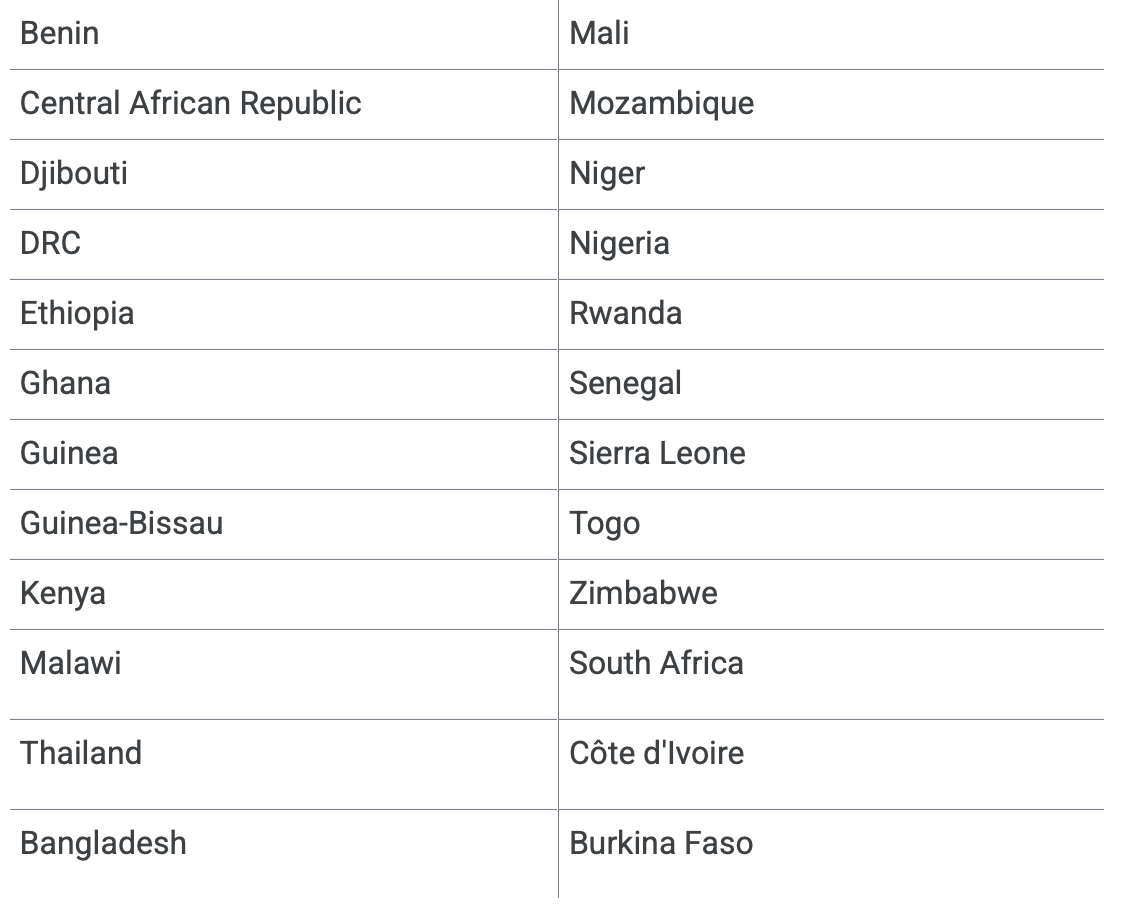
Send an inquiry to info@ammnet if you feel your local chapter has not been included by mistake or if you wish to be connected with a local chapter contact. info@ammnet if you feel your local chapter has not been included by mistake or if you wish to be connected with a local chapter contact.
Local Chapter Information & Guidance
Member Reading Corner
If you'd like to share a paper or any other publication with the AMMnet community, send an email to info@ammnet.org and we will consider including it in the newsletter.
Seminar Recap and Recordings
AMMnet Seminar Series
November 4, 2025, 15 hr UTC
Mathematical Model of Malaria Dynamics in Case of Wetlands
Presenter: Walle Tilahun Alemu
This presentation delved into an eco-epidemiological model designed to unravel the complex dynamics of malaria transmission in wetland environments. We extended the classic Ross-Macdonald framework by explicitly incorporating larval mosquito dynamics, predator-prey interactions, and a hydrological “wetness index.” Through stability analysis and numerical simulation, we derived a novel expression for the basic reproduction number (R₀) that captured the critical balance between wetland productivity and natural biological control. Our findings identified key ecological thresholds and demonstrated how seasonal hydrological patterns drove malaria incidence. The model served as a virtual laboratory, generating synthetic epidemiological data (epidata) to test intervention strategies, such as the targeted use of larvivorous fish, providing a quantitative framework for sustainable malaria control in these ecologically sensitive regions.
Find the Recording Here in English!
Recordings Library on the AMMnet Website
In Memoriam: Professor Jean Louis Abdourahim Ndiaye
AMMnet is deeply saddened by the passing of Professor Jean Louis Abdourahim Ndiaye, October 25, 2025. As a member of our Advisory Board, he played a meaningful role in AMMnet’s early development—helping guide us from a small group of 40 to a global network of more than 2,000 members. His support, insight, and encouragement helped shape AMMnet into the community it is today.
Professor Ndiaye’s influence reached far beyond our network. A leading figure in parasitology and malaria research, his work at the University of Thiès, Senegal, helped produce the evidence that led to the World Health Organization’s recommendation of Seasonal Malaria Chemoprevention (SMC) in 2012. His contributions helped establish the SMC Working Group within the RBM Partnership to End Malaria and supported large, multi-country collaborations focused on improving malaria prevention in real-world settings.
The impact of his efforts is extraordinary: millions of children now receive SMC each year, and its scale-up across many countries stands as a testament to his dedication, scientific leadership, and commitment to saving lives.
Those who worked with him will remember his intelligence, humility, kindness, and unwavering respect for colleagues. He embodied the spirit of collaboration that AMMnet values deeply.
We extend our heartfelt condolences to his family, his colleagues at the University of Thiès, and the global health community. We are profoundly grateful for his contributions and will carry forward the legacy he leaves behind.