Welcome to the December 2025 newsletter!
Please contact info@ammnet.org if you would like to contribute any items to next month’s newsletter.
Register for the AMMnet Monthly Seminar
January 6, 15 hr UTC
Different bioassays, consistent predictions: Comparing semi-field methods for insecticide-treated net evaluation
Presenter: Dr. Emma Fairbanks
As malaria control programs face decisions about deploying novel insecticide-treated nets (ITNs), understanding how different evaluation methods translate to real-world effectiveness is critical. This talk compares two WHO-recommended semi-field methods—Ifakara Ambient Chamber tests (I-ACT) and experimental hut trials (EHT)—using mathematical modeling and Bayesian inference to analyse ITN products. While the two bioassays show different patterns in estimating specific mosquito behavioral responses, both yield remarkably similar predictions for overall reduction in vectorial capacity—the key metric for transmission potential. This finding suggests that I-ACT can provide reliable initial assessments of vector control efficacy with practical advantages: faster data collection and flexibility in testing different mosquito strains.
About the presenter:
Dr. Emma Fairbanks is a Research Fellow in Health Inequalities in the Mathematics Department at the University of Manchester. She develops mathematical models to increase understanding of vector-borne disease transmission and control. Her research integrates vector biology, human behaviour, and pathogen dynamics to understand transmission heterogeneity - how disease risk concentrates among high-risk populations shaped by occupation, gender roles and socio-economic factors. Her goal is to transform these academic findings into practical tools for disease elimination by co-developing open-source software packages and decision-support systems with partners across endemic countries - tools that national programs can implement with their own data, working toward a future where all countries have the quantitative frameworks needed to achieve elimination efficiently and equitably.
PSA: Real-time interpretation to French and Portuguese will be available.
Register Here for the Seminar Series
Register for the Next Hackathon!
GitHub, R & Quarto for Reproducible Public Health Data Science
Date: Wednesday, January 14
Time: 13hr UTC
Instructor: Justin Millar, PhD, Research Scientist at PATH
About the session
Join us for the next AMMnet Hackathon, a hands-on, two-hour collaborative workshop focusing on building practical skills in reproducible analytics. Participants will learn how to set up and use Git and GitHub within RStudio, structure collaborative data projects, track changes with version control, and publish dynamic Quarto documents and websites using GitHub Pages. No prior GitHub experience required, however you should create a GitHub account before the workshop if you want to follow along with the exercise.
All experience levels are welcome! Register at the link below.
The session will be recorded and made publicly available to all AMMnet members via the hackathon blog.
This Hackathon is taught in English, but we invite instructors of other languages to lead sessions. Reach out to info@ammnet.org if you are interested in leading a session in French or Portuguese.
Register Here for the January 14 Hackathon
AMMnet Small Event Award — Call for Proposals!
AMMnet is pleased to announce an exciting funding opportunity for members: the AMMnet Small Event Award — supporting small, local, in-person events of up to $3,000.
This award is designed to help AMMnet members organize meetings, conferences, workshops, or other gatherings that strengthen connections among malaria modelers, data analysts, and partners.
Deadline: Submit your application to info@ammnet.org by February 1, 23:59 GMT.
Funding: Up to $3,000, to be spent within 12 months of the award date.
🛑 Mandatory Requirement
You must use the official Small Event Award Template available on our website (in English, French, and Portuguese).
The template is your proposal. Applications not using the template will not be considered.
Visit our website for full details and access to the template and guidance documents.
📄 Required Application Materials
Include the following items with your submission:
- Completed Small Event Award Template
- Biosketch (CV or résumé) for key personnel
- Letter of support from the main organizer’s institution, signed by an institutional authority, confirming:
- The organizer’s position in the institution
- The institution’s support for the application and proposed activities
ℹ️ Eligibility
Applicants do not need to represent a local AMMnet chapter.
Any individual AMMnet member is eligible to apply for the Small Event Award.
Proposal needs to be led by one or more AMMnet members based in a malaria-endemic country.
For details and templates, visit our website.
More information, required template and guidance here
Register for the Next Francophone Seminar!
Impact of the carriage of the RR, RS and kdrgenotypes on the prevalence of microsporidia infection in An. gambiae s.s. and An. coluzzii in southern Benin.
Date: Thursday, January 29
Time: 13:00 GMT
Presenter: Dr. Totongnon Gerard
If you would like to host a seminar or hackathon in French, contact us at info@ammnet.org.
Register Here for the Francophone Seminar
AMMnet Has a New Home Online! Explore Our New Website.
We’re excited to introduce the new Recordings Library on the AMMnet website! This new page brings together recordings from across our events, making it easier than ever to access and revisit the knowledge shared within our community.
AMMnet hosts a wide range of events, including hackathons, seminars, special discussion sessions, and our annual in-person meetings. These sessions feature both invited experts and AMMnet members sharing practical insights, experiences, and ideas relevant to applied mathematical modeling and public health.
Whether you missed a live session or want to revisit a topic, the Recordings Library allows you to learn at your own pace. We invite you to explore the new page and make the most of these shared resources.
Recordings Library on the AMMnet Website
Meet-the-Modelers: Call for Volunteers!
Thanks to all past presenters for sharing your backgrounds and professional experience!
Want to introduce yourself with a quick 2-minute lightning talk at an upcoming AMMnet monthly seminar?
A great opportunity to:
- Showcase your work
- Gain visibility
- Connect with peers
Interested?
Click on the link below to sign up!
Fill out the Meet-the-Modeler Interest Form Here
Have news, events or resources to share?
Use AMMnet’s Social Media Request Form!
Click on the link below to submit your request, and we’ll consider your post for Facebook, X, Bluesky, and LinkedIn.
Find the Social Media Posting Request Form Here
Job Opportunities
Postdoctoral Research Associate - Infectious Diseases Position in the Mitreva Lab at WashU Medicine
The postdoctoral fellow will contribute to NIH-funded projects aimed at developing and applying molecular genetic approaches to distinguish the causes of infection resurgence and persistence (e.g., recrudescence, new infection, poor drug response, parasite migration). The primary focus will be on integrating genetic data into epidemiological models of lymphatic filariasis to estimate the likelihood and pace of resurgence and to support surveillance and programmatic decision-making. The candidate will lead the mathematical modeling of lymphatic filariasis transmission and will have opportunities to travel and present at national and international conferences.
For more information, please view the job announcement.
The CDC Steven M. Teutsch Prevention Effectiveness Fellowship is Looking for Fellows
We are currently recruiting fellows for the 2026 Class of the PE Fellowship which starts on August 10, 2026. The PE Fellowship is a two-year post-doctoral research and service fellowship in 1995 to address an on-going demand in the field of public health for quantitative policy analysis, health economics-based inquiry, and integrative health services research. Through applying a range of analyses and evaluation methods, prevention effectiveness assesses the public health impact of policies, programs, and practices by determining their outcomes, quality, and cost. At CDC, prevention effectiveness research includes the use of econometric, decision, simulation, and operations analysis and modeling to understand determinants of health, morbidity, mortality, health inequalities, healthcare use, and expenditures. In 2021, the PE Fellowship added a Modeling and Analytics Track to build capacity in mathematical disease modeling.
The PE Fellowship has experienced exceptional growth over the past few years, and may now be the largest post-doctoral training program in health economics in the US. The PE Fellowship is extremely competitive. In 2024, 132 competitive applications were received for 16 positions. We currently have 10 open fellowship positions for the Class of 2026. PE Fellows represent some of the elite academic programs in the nation and internationally. PE Fellows hold doctoral degrees in economics or applied economics, operations research/industrial engineering, health services research, applied mathematics, disease ecology, or a related quantitatively oriented field. PE Fellows enter the PE Fellowship with varying levels of experience. For most PE Fellows, CDC is their first real “job,” while some PE Fellows have significant experience. Many PE Fellows are non-US citizens, and CDC sponsors their OPT-STEM, J1, TN, and other visas. The starting salary is $98,000 with Federal benefits.
Again, we are currently recruiting fellows for the 2026 Class of the PE Fellowship which starts on August 10, 2026. The application window closes January 9, 2026.
Find more information and apply here
PhD Positions Within VectorGrid-Africa Available at the University of Glasgow
VectorGrid-Africa, a newly established EU/EDCTP-funded network, is creating permanent observatories across Tanzania, Kenya, Mozambique, South Africa, and Madagascar to monitor mosquitoes and mosquito-borne diseases. Each observatory node will generate vast insect collections but currently has no mechanism for handling or analyzing the large fraction of non-mosquito invertebrates yielded from the mosquito traps (the by-catch). This PhD will leverage these specimens to build a mosquito-associated biodiversity baseline and track changes in the insect communities in African ecosystems. Using DNA barcoding, metabarcoding, and ecological modelling, the student will characterize the composition and diversity of the mosquito-collection by-catch insects across multiple sites.
The University of Glasgow is offering two fully funded PhD positions within the new VectorGrid-Africa network.
Application deadline is 12 January 2026.
PhD Studentships in Health Analytics and Modelling
The London School of Hygiene & Tropical Medicine (LSHTM), Imperial College London and the UK Health Security Agency (UKHSA) are pleased to invite applications for two PhD studentships in real-time infectious disease modelling, as part of the NIHR funded Health Protection Research Unit (HPRU) on Health Analytics, Epidemic Modelling and Health Economics. The studentships will start in April or September 2026 and come with 3.5 years of funding.
The awards will cover a tax-free stipend of £22,780 per year and tuition fees at home rates.
The HPRU in Health Analytics and Modelling brings together three of the world’s leading groups in infectious disease analytics and modelling (at Imperial College, LSHTM and UKHSA). It will create an unparalleled environment for research degree students to thrive, being supervised by leading experts in their fields. These two studentships will be based within LSHTM’s Faculty of Epidemiology and Population Health but will be jointly supervised by a team representing each of the three institutions. All three institutions are multi-disciplinary encompassing epidemiologists, data scientists, mathematical modellers, health economists and public health practitioners.
Please see the project descriptions for the type of research that the projects involve. The exact focus of each PhD will be developed with the successful candidate and will depend on their interests and prior expertise. Applicants are asked to contact the project supervisors for an informal discussion prior to applying.
PhD and Postdoc Opportunities Available at UC Berkeley and UCSF
Our research lab at UC Berkeley and UCSF is accepting PhD applications for Fall 2026 as well as Postdoc positions to start as soon as possible. Our research focuses on developing machine learning and AI methods for healthcare applications. We are affiliated with the UC Berkeley/UCSF Computational Precision Health (CPH) program, as well as the EECS and Statistics departments at UC Berkeley. Our lab is also affiliated with the Berkeley AI Research (BAIR) Lab and the Center for Targeted Machine Learning and Causal Inference (CTML). Interested students and Postdoc are encouraged to apply through the CPH, EECS or Statistics departments.
Courses and Learning Opportunities
Sunday Weekly Course: Data Analysis and Visualization Using R
Join us every Sunday for a virtual course series on Data Analysis and Visualization Using R, led by Shakira Babirye (Biostatistician/Data Scientist, Infectious Diseases Research Collaboration).
📅 When: Sundays, 7:00–8:00 AM (GMT+3, East African Time)
📍 Where: AMMnet Zoom (link provided upon registration)
👩🏽🏫 Instructor: Shakira Babirye
✉️ To Join: Email Shakira at bbrshakira@gmail.com to receive the Zoom link.
Recordings of previous sessions are available on the AMMnet YouTube channel (link below)
AMMnet YouTube Channel-Course Recordings
Subgroups, Working Groups, and Regional Activities
AMMnet has 5 established local chapters!
And two new local chapters under review – Burkina Faso and Benin.
If you would like to be connected with local chapters in Cameroon, Tanzania, Liberia, Uganda or Zambia, you may send email using the respective addresses below.
- AMMnet Uganda Chapter, ammnetuganda@gmail.com
- Applied Malaria Modeling Network Zambia, ammnetzambia@gmail.com
- AMMnet Liberia Chapter, ammnet.liberia@gmail.com
- AMMnet Cameroon Chapter, ammnetcameroon@gmail.com
- AMMnet Tanzania Chapter, ammnettz@gmail.com
Establish an AMMnet Local Chapter to Strengthen Malaria Modeling and Analytics in Your Region
AMMnet’s Local Chapters bring together modelers, analysts, scientists, public health professionals, partner institutions and civil society, to work together locally to adopt common approaches to improve the use of modeling and analytics for controlling and eliminating malaria whilst reflecting the mission of global AMMnet.
Establishing a local AMMnet chapter is a three-step process:
- Pre-registration with global AMMnet
- A completed Local Chapter Establishment Application Form
- AMMnet Board approval with guidance from the Local Chapter Development Task Force
If you are an AMMnet member and you are interested in establishing a local chapter, please refer the information and guidelines found at the link below.
If you have any questions, considerations or suggestions for establishing local AMMnet chapters, please send us an email at info@ammnet.org.
22 AMMnet local chapters are in the process of establishment. Refer to the list of those local chapters below and their stage of establishment.
Local Chapters with Establishment in Process
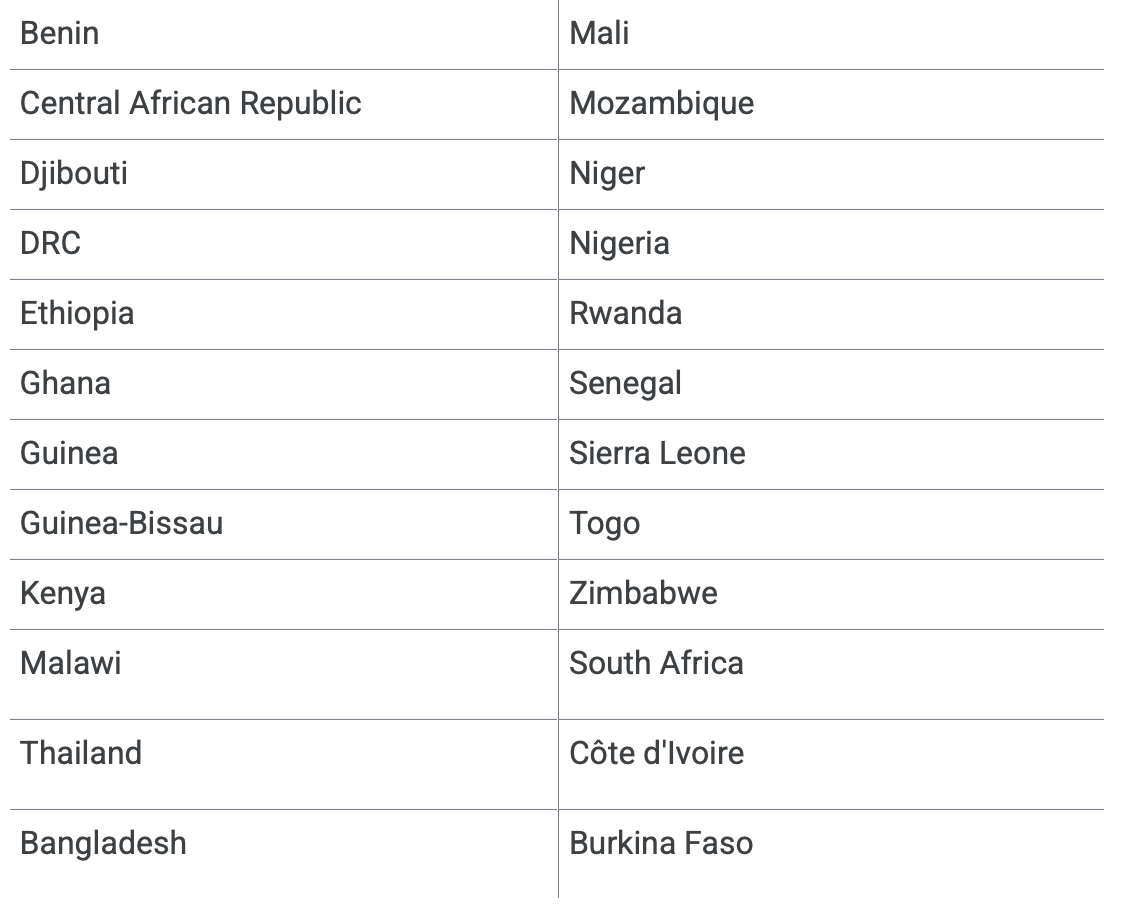
Send an inquiry to info@ammnet if you feel your local chapter has not been included by mistake or if you wish to be connected with a local chapter contact. info@ammnet if you feel your local chapter has not been included by mistake or if you wish to be connected with a local chapter contact.
Local Chapter Information & Guidance
Member Reading Corner
If you'd like to share a paper or any other publication with the AMMnet community, send an email to info@ammnet.org and we will consider including it in the newsletter.
World malaria report 2025 - Addressing the threat of antimalarial drug resistance
This year’s report provides a critical and up-to-date snapshot of efforts to control and eliminate malaria across 80 countries, including the epidemiological situation, progress toward the global technical strategy, the funding landscape, the status of malaria interventions and of emerging biological threats.
The report also presents the threat posed by antimalarial resistance and its impact in a dedicated chapter, emphasizing the need for a more coordinated and effective response that is locally tailored and supported by regulation, strong quality-assurance systems, active provider engagement, and the timely generation and sharing of high-quality drug-resistance data.
The WHO African Region accounted for 94% of global malaria cases and 95% of malaria deaths in 2024, with five countries – Nigeria (24.3%), the Democratic Republic of the Congo (12.5%), Uganda (4.7%), Ethiopia (4.4%) and Mozambique (3.6%) – contributing nearly half of all cases. Estimated malaria cases increased by 9 million (3.5%) from 2023 to 2024, partly driven by trends in Ethiopia and Madagascar. The WHO Eastern Mediterranean Region, which accounted for nearly 4% of global cases in 2024, experienced an estimated 6% decrease in malaria case incidence from 2023 to 2024, the first decline since 2020.
For the full report see pdf linked below.
Find the Report Here
Seminar Recap and Recordings
AMMnet Seminar Series
December 2, 2025, 15 hr UTC
Mathematical Model of Malaria Dynamics in Case of Wetlands
Presenter: Helen Nwanosike
This presentation featured the MESA Resource Hub, a dynamic and living library of malaria and malaria-related resources. The session showcased how the Hub facilitates knowledge exchange and capacity strengthening, outlining its structure and key functionalities. It demonstrated how to explore curated resources by type, theme, source, or country, and showed how to move seamlessly from the Hub to interconnected platforms such as MESA Track and the MESA Correspondents Program. The presentation also highlighted materials of particular relevance to the AMMnet community, including the dedicated AMMnet Recommended Resources page and the Training Resource Hub.
About MESA: MESA is an Alliance that brings together funders, policymakers, national malaria programs, and academia to share and exchange knowledge, catalyze malaria research and support its translation into policy and practice.
AMMnet's Partnership with MESA
Emma Fairbanks, who supports the partnership with MESA through the Learning Committee, concluded with a short discussion on how the committee plans to leverage the hub and recent training survey results to better highlight and disseminate training opportunities to AMMnet members.
Find the Recording Here in English!
Recording Available!
Panel on Building a Successful Career in Modeling
Thank you to everyone who joined us for the 90-minute panel discussion on advancing a career in modeling. The session brought together experienced professionals who shared valuable strategies on defining career paths, pursuing funding and grant opportunities, and building the skills and networks essential for long-term success.
Panelists included:
- Punam Amratia, Senior Research Scientist & Technical Lead, Malaria Atlas Project (MAP), Dar es Salaam
- Emmanuel Afolabi Bakare, Founder & Director, ICAMMDA & Professor of Applied Mathematical Modelling and Analytics, Federal University Oye Ekiti
- Mor Absa Loum, Lecturer and Researcher, Iba Der Thiam University of Thies
- Susan Rumisha, Principal Research Scientist & Lead, Malaria Atlas Project East Africa (MAP EA) Node, Ifakara Health Institute
- Pete Winskill, Advanced Research Fellow, School of Public Health, Director, Translational Modelling Hub, Imperial College London
Watch the Recording Here
Recording Available!
Francophone Seminar Series: How Predictive Models Are Transforming the Fight Against Malaria in Africa
Thank you to everyone who attended the latest session of the Francophone Seminar Series. This seminar, presented in French by Dr. Boubacar Diallo, explored how advances in predictive modeling are reshaping malaria control efforts across Africa.
During the session, Dr. Diallo discussed how predictive approaches can support intervention planning, improve epidemiological surveillance, and strengthen local response capacity. Participants learned about concrete examples, recent innovations, and future directions for applying predictive models in the fight against malaria.
Watch the Recording Here
Board Meeting Summary
The Board met December 16, 2025
Present: Hannah, Nadege, Antonio, Mor, Justin, Susan, Caitlin, Emilie, Cherlynn, Shakira
Absent: Luc
Secretariat present: Jaline, Shannon, Selen
DISCUSSION
Potential Advisory Board candidates to take Bea Galatas and Jean Louis Ndiaye seats were discussed. The Board intends to add 3 new Advisory Board Members and considered linguistic, gender and geographic diversity in their discussion and decisions.
- 3 candidates in the "malaria scientist" category discussed and considered
- Board agreed to invite one candidate
- 6 candidates in the "NMP/MOH" category discussed and considered
- Board agreed to invite one candidate
- 3 candidates in the "malaria partner organizations" category were discussed and considered
- Board agreed to invite one candidate
- 3 candidates in the "malaria scientist" category discussed and considered