Welcome to the February 2026 newsletter!
Please contact info@ammnet.org if you would like to contribute any items to next month’s newsletter.
Register for the AMMnet Monthly Seminar
March 3, 15 hr UTC
Incorporating Environmental Determinants of Malaria into Predictive Models for Decision Support
Presenter: Dr. Michael Wimberly
About the presentation:
Although tremendous progress has been made toward reducing the global burden of malaria, this disease remains a significant public health challenge in sub-Saharan Africa. In Ethiopia, confirmed malaria cases tripled between 2019 and 2023 and have continued to rise. Malaria surveillance is a core intervention that can improve targeting and increase the effectiveness of malaria control and elimination efforts. However, accomplishing this goal will require shifting from reactive to predictive approaches that leverage surveillance data to understand variation in malaria transmission over space and time.
In this seminar, Dr. Wimberly will present the results of collaborative research in Ethiopia on the influences of climate and land cover on malaria epidemics. The aims are to elucidate the environmental determinants of malaria and develop predictive models for disease forecasting and risk mapping. The results of this research have been incorporated into the Epidemic Prognosis Incorporating Disease and Environmental Monitoring for Integrated Assessment (EPIDEMIA) system, a set of software tools designed to automate data processing, modeling, and report generation for malaria early warning.
About the presenter:
Dr. Michael Wimberly is Professor of Geography and Interim Director of the Data Institute for Societal Challenges at the University of Oklahoma. His research focuses on the environmental drivers of malaria and other vector-borne diseases, with an emphasis on spatial modeling for risk prediction and forecasting. This work supports efforts to combat epidemic malaria in Ethiopia and urban malaria in India.
Note: Real-time interpretation to French will be available, but members can activate the CAPTIONS feature in Zoom for real-time translation to the language of their choice.
Register Here for the Seminar Series
Register for the Francophone Monthly Seminar Series
February 25, 13 hr UTC
Summarised presentation on the World Health Organization (WHO) 2025 report on malaria
Presenter: Dr. Arnaud Le Menach
About the presentation:
Each year, the WHO World Malaria Report provides a comprehensive and up-to-date assessment of trends in malaria control and elimination worldwide. The 2025 edition reviews investments in malaria programs and research and assesses progress in all key areas of intervention—prevention, diagnosis, treatment, elimination, and surveillance—in 80 countries where malaria is endemic. This year's report highlights the growing threat of antimalarial drug resistance. Since 2000, 2.3 billion malaria cases and 14 million deaths have been prevented worldwide—including 1 million lives saved in 2024 alone—and progress toward global elimination goals has continued, with 47 countries and one territory now officially certified malaria-free by the WHO. Despite this progress, malaria remains a significant global health problem, with approximately 282 million cases and 610,000 deaths in 2024, about 9 million more cases than the previous year. The WHO African Region continues to bear the brunt of the burden, with 11 countries accounting for about two-thirds of global cases and deaths. However, progress in reducing malaria mortality rates remains very insufficient.
About the presenter:
Dr. Arnaud Le Menach is Head of Strategic Information for Impact in the WHO Department of Malaria and NTDs (Neglected Tropical Diseases), where he focuses on strengthening malaria and NTD surveillance systems, implementing digital solutions, and generating evidence to inform decision-making. A veterinarian and epidemiologist with a PhD in infectious disease modeling, Dr. Le Menach has over 20 years of experience in public health.
From 2012 to 2024, he led the Surveillance, Analytics, and Technology Unit at the Clinton Health Access Initiative, overseeing programs on malaria and NTDs in sub-Saharan Africa, South and Southeast Asia, and Latin America and the Caribbean. He has also collaborated with academic institutions, public health agencies such as the European Centre for Disease Prevention and Control, and international organizations such as the Food and Agriculture Organization of the United Nations.
His research on infectious diseases, particularly vector-borne diseases, has been published in leading peer-reviewed scientific journals, including Scientific Reports, Emerging Infectious Diseases, Malaria Journal, and the American Journal of Tropical Medicine and Hygiene.
Note: The webinar is in French ONLY, but members can activate the CAPTIONS feature in Zoom for real-time translation to the language of their choice.
Register Here for the Francophone Seminar Series
Meet-the-Modelers: Call for Volunteers!
Thanks to all past presenters for sharing your backgrounds and professional experience!
Want to introduce yourself with a quick 2-minute lightning talk at an upcoming AMMnet monthly seminar?
A great opportunity to:
- Showcase your work
- Gain visibility
- Connect with peers
Interested?
Click on the link below to sign up!
Fill out the Meet-the-Modeler Interest Form Here
Have news, events or resources to share?
Use AMMnet’s Social Media Request Form!
Click on the link below to submit your request, and we’ll consider your post for Facebook, X, Bluesky, and LinkedIn.
You may also send your request by email to info@ammnet.org.
Find the Social Media Posting Request Form Here
Job Opportunities
Senior Research Scientist, Health and Data Systems Modeling at Gates Foundation
As part of the Gates Foundation, the Institute for Disease Modeling’s (IDM) mission is to support global efforts to eradicate infectious diseases and achieve permanent improvements in health by developing, using, and sharing computational modeling tools and promoting quantitative decision-making.
In this role, we seek a full-time Senior Research Scientist to join the Health and Data Systems (HDS) team within IDM’s Gender, Vulnerability and Health Equity (GVHE) research team. We are seeking a candidate that will apply advanced quantitative modeling to inform strategies that improve the delivery and impact of health interventions
Data Analytics Fellow, Malaria Control and Elimination Partnership in Africa (MACEPA)
PATH is a global organization that works to accelerate health equity by bringing together public institutions, businesses, social enterprises, and investors to solve the world’s most pressing health challenges. With expertise in science, health, economics, technology, advocacy, and dozens of other specialties, PATH develops and scales solutions including vaccines, drugs, devices, diagnostics, and innovative approaches to strengthening health systems worldwide.
MACEPA is currently recruiting the third cohort of Data Analytics Fellows, to be based within existing MACEPA teams across various African countries. For this round of recruitment, the fellow will be recruited and based in Nigeria where s/he originates from. The aim of the fellowship program is to train a cohort of skilled individuals to support the National Malaria Programs (NMPs) in the management, visualization and analysis of data to improve evidence-based decision-making. The fellow will receive a variety of tailored technical and professional training, alongside mentorship from the MACEPA data analytics team based in the US and in-country staff. By the end of the fellowship, a fellow will ultimately deliver data analytics training to NMPs in collaboration with the analytics team. The position is a fixed-term, non-renewable, eighteen-month contract.
Application Deadline 27 February 2026
Data Analyst, MMGH Consulting
MMGH Consulting is looking for a Data Analyst who is curious, analytical, and motivated to translate data into insights that matter in global health contexts. This is a Hybrid role, with weekly coworking days in Geneva or Zürich. Please apply via careers@mmglobalhealth.org
Postdoctoral Research Associate in Biostatistics & Health Data Science at Lehigh University
The Departments of Biostatistics and Health Data Science, together with the Department of Civil and Environmental Engineering at Lehigh University, seek a motivated and talented Postdoctoral Research Associate to contribute to our research initiatives and academic programs. This role offers a unique opportunity to work with Professor Thomas McAndrew in biostatistics and with Professor Gabrielle String on water, sanitation, and hygiene (WASH) challenges in humanitarian and development contexts. The Postdoctoral Research Associate will engage in interdisciplinary and cutting-edge research and gain experience in mentorship and academic service.
The individual hired will be expected to design studies, submit IRB proposals, collect and process environmental microbe data, and collaborate with partners; format, clean, and analyze infectious disease data related to outpatient, national, and global settings. The individual hired will also be expected to supervise day-to-day laboratory activities, develop project independence, publish research, and support grant proposals.
Postdoctoral Researcher Positions Available in Mathematical Modelling and Epidemiological Analysis at the Harvard T.H. Chan School of Public Health
The Department of Epidemiology at the Harvard T.H. Chan School of Public Health studies the frequency, distribution, and determinants of disease in humans, a fundamental science of public health. In addition to pursuing ground-breaking global research initiatives, we educate and prepare future medical leaders and practitioners as part of our mission to ignite positive changes in the quality of health across the world.
The Department of Epidemiology is seeking 2-3 postdoctoral researchers for projects related to mathematical modelling and epidemiological analysis of HIV epidemics in eastern and southern Africa. Postholders will be responsible for developing and leading analytical and modelling components of internationally collaborative projects funded by the Gates Foundation, and in partnership with ministries of health, academic partners, programme implementers, and international health agencies such as UNAIDS, WHO, PEPFAR, and the Global Fund.
The postholder will be based in the Center for Communicable Disease Dynamics within the Department of Epidemiology, and will be a member of the HIV Inference Group a geographically distributed and substantively diverse research team led by Dr. Jeff Imai-Eaton. Postholders will be responsible for leading and managing key working relationships with other group members, external project partners and collaborators, and project stakeholders.
The individual hired will be expected to design studies, submit IRB proposals, collect and process environmental microbe data, and collaborate with partners; format, clean, and analyze infectious disease data related to outpatient, national, and global settings. The individual hired will also be expected to supervise day-to-day laboratory activities, develop project independence, publish research, and support grant proposals.
Research Fellowship in Public Health Intelligence
The Research Fellowship in Public Health Intelligence is a joint initiative of the Charité Center for Global Health and the WHO Hub for Pandemic and Epidemic Intelligence. It invites academic researchers from diverse disciplines and countries to contribute to applied global health research, focusing on priority research areas that strengthen our collective understanding of pandemic and epidemic threats and better inform decision-making in health emergencies. The fellowship is also aligned with overarching research themes.
The program is aimed at mid- to senior-career researchers and offers a research stay of up to six months in Berlin.
Fellows work on independent research projects and are embedded within the CCGH and the WHO Hub in Berlin, benefiting from mentorship, collaboration opportunities, and engagement within Berlin’s Global Health ecosystem, with the aim of fostering long-term partnerships.
Application Deadline 3 March 2026
Opportunities to Publish
Special Issue Call for Papers in Frontiers - Synergistic Applications of Mechanistic Models and AI in Understanding Biology and Medicine
We would like to call your attention to a special issue in Frontiers, “Synergistic Applications of Mechanistic Models and AI in Understanding Biology and Medicine,” and invite your submission.
Through this special issue, we aim to promote interdisciplinary research that integrates mechanistic, theory-driven models with data-driven artificial intelligence and machine learning approaches. By combining these complementary paradigms, the issue seeks to advance our understanding of complex biological and medical systems, improve inference and prediction, and support more effective decision-making in public health and clinical practice.
We welcome original research articles, reviews, and methodological contributions addressing topics such as infectious disease dynamics, host–pathogen interactions, treatment and intervention strategies, and the development of hybrid modeling frameworks that leverage both mechanistic insight and AI-based methods.
Call for Papers - Nature Portfolio in Infectious Disease Modelling for Health Policy
Infectious disease transmission models are mathematical representations of disease systems that are used to investigate how epidemics evolve. During the COVID-19 pandemic, models gained high public awareness as they were used to forecast infection trends and inform key decisions about implementation of non-pharmaceutical interventions. Beyond emergency settings, models can also be used for longer-term decisions, for example, to identify risk groups that should be prioritized for vaccines or therapeutics.
With this cross-journal collection, Communications Health, and Nature Communications invite Articles describing the application of infectious disease models to timely health policy questions. Communications Health and Nature Communications also welcome Reviews, Perspectives and Comments on topics such as how best to translate findings from models for policymakers, case studies of successful implementation of model recommendations in policy, or methodological issues in mathematical modelling.
Submission Deadline 28 August 2026
Special Issue Call for Papers in Epidemics - Training the Future: Replicable Strategies for Teaching Infectious Disease Modeling Forecasting and Analytics
We would like to call your attention to a special issue in Epidemics, “Training the Future: Replicable Strategies for Teaching Infectious Disease Modeling, Forecasting and Analytics”, and invite your submissions.
Through this special issue, we aim to promote access to high-quality training by summarizing replicable programs (e.g., workshops, fellowships, and webinars) within citable scholarly publications. Articles will describe the design, implementation, and evaluation of programs, with supplementary materials that can be reused or adapted for future training activities. We invite submissions on initiatives spanning the career spectrum and global contexts. A limited number of review articles are also welcome.
Submission Deadline 15 June 2026
Courses and Learning Opportunities
WHO Academy Course: Malaria: Harnessing the Power of Routine Facility Data
We are excited to announce the launch of the WHO Academy’s course, “Harnessing the Power of Routine Facility Data: Malaria”. This course is designed to empower health professionals with the skills to analyze and interpret routine malaria surveillance data to drive evidence-based decision-making, particularly at health facility and sub-national levels.
The course consists of five structured modules, totalling approximately 10-12 hours of self-paced learning. Participants will gain practical knowledge in:
- Assessing malaria surveillance cascades
- Interpreting malaria trends and incidence data
- Identifying high-risk geographical areas and populations
- Evaluating the delivery and quality of malaria intervention.
- Assessing the quality of routinely reported malaria data
By the end of the course, participants will be equipped to strengthen programmatic responses to malaria and enhance data-driven decisions to improve health outcomes. And, receive an award of completion! We encourage all national malaria programs, surveillance officers, and partners to take advantage of this valuable training opportunity.
SISMID Short-course Scholarship
The Summer Institute in Statistics and Modeling in Infectious Diseases (SISMID) offers short-course training in statistical and mathematical modeling for infectious diseases. Since its founding in 2009 by Dr. Betz Halloran of University of Washington, SISMID has trained thousands of researchers from academia, government, and industry. The program transitioned to Emory University in 2024, where it is directed by Dr. Natalie Dean, offering both in-person and online summer modules.
SISMID provides scholarships that cover registration costs for eligible graduate students and postdocs. Limited travel support is also available to cover lodging in Emory’s on-campus dormitories for in-person participants.
Application Deadline 28 Feb 2026
Subgroups, Working Groups, and Regional Activities
AMMnet has 6 established local chapters.
Congratulations to our newest established local chapter – AMMnet Burkina Faso Chapter!
One new local chapters is under review – Benin.
If you would like to be connected with local chapters in Burkina Faso, Cameroon, Tanzania, Liberia, Uganda or Zambia, you may send email using the respective addresses below or reach out to info@ammnet.org and the Secretariat will connect you to the chapter leadership.
- AMMnet Uganda Chapter, ammnetuganda@gmail.com
- Applied Malaria Modeling Network Zambia, ammnetzambia@gmail.com
- AMMnet Liberia Chapter, ammnet.liberia@gmail.com
- AMMnet Cameroon Chapter, ammnetcameroon@gmail.com
- AMMnet Tanzania Chapter, ammnettz@gmail.com
- AMMnet Burkina Faso Chapter, ammnetburkina@gmail.com
Establish an AMMnet Local Chapter to Strengthen Malaria Modeling and Analytics in Your Region
AMMnet’s Local Chapters bring together modelers, analysts, scientists, public health professionals, partner institutions and civil society, to work together locally to adopt common approaches to improve the use of modeling and analytics for controlling and eliminating malaria whilst reflecting the mission of global AMMnet.
Establishing a local AMMnet chapter is a three-step process:
- Pre-registration with global AMMnet
- A completed Local Chapter Establishment Application Form
- AMMnet Board approval with guidance from the Local Chapter Development Task Force
If you are an AMMnet member and you are interested in establishing a local chapter, please refer the information and guidelines found at the link below.
If you have any questions, considerations or suggestions for establishing local AMMnet chapters, please send us an email at info@ammnet.org.
22 AMMnet local chapters are in the process of establishment. Refer to the list of those local chapters below and their stage of establishment.
Local Chapters with Establishment in Process
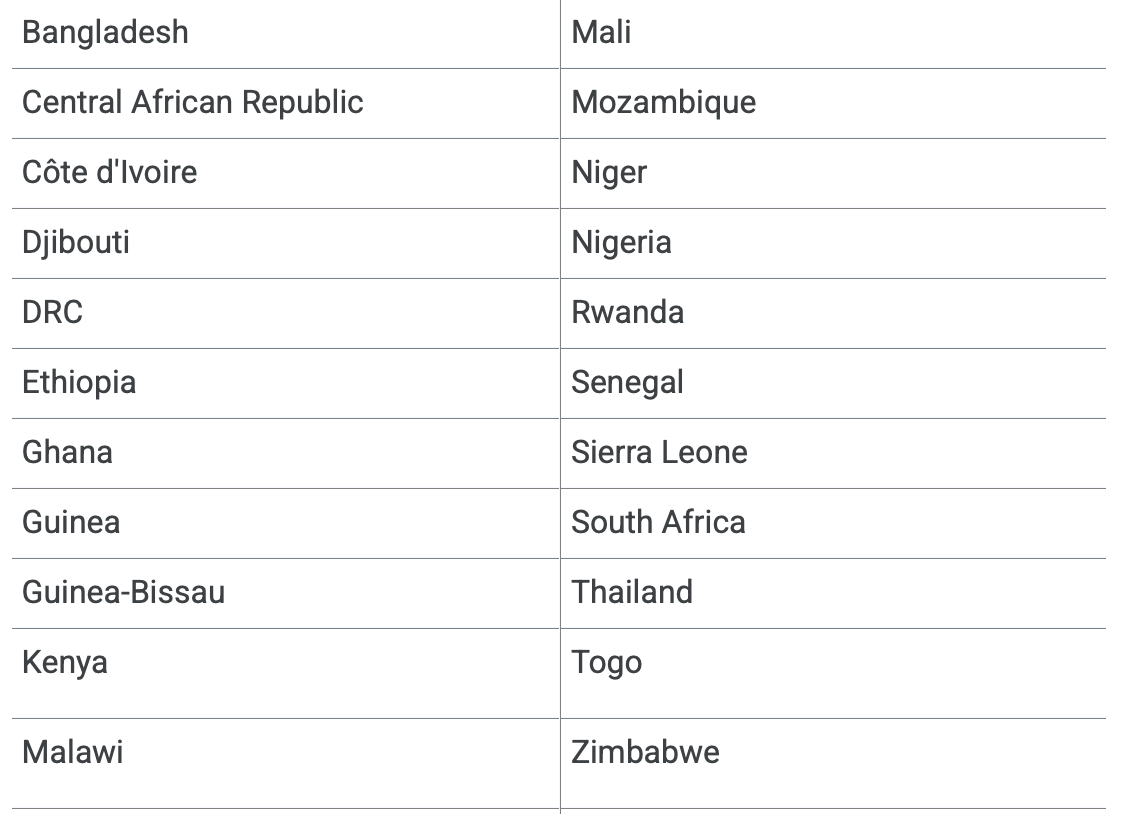
Send an inquiry to info@ammnet.org if you feel your local chapter has not been included by mistake or if you wish to be connected with a local chapter contact.
Local Chapter Information & Guidance
Member Reading Corner
If you'd like to share a paper or any other publication with the AMMnet community, send an email to info@ammnet.org and we will consider including it in the newsletter.
Seminar Recap and Recordings
AMMnet Seminar Series
February 3, 2026, 15 hr UTC
From Parallel to Integrated: Harmonizing SMC and Routine Supply Chains in Northern Nigeria
Presenter: Michael Audu
The presentation outlines a strategic framework to harmonize malaria supply chains in Northern Nigeria. Based on a retrospective study (2022–2024) in Kebbi, Sokoto, and Zamfara, it highlights how parallel logistics for seasonal malaria chemoprevention (SMC) and routine treatment create critical gaps, such as the collapse of ACT distribution during peak transmission months. To address these systemic failures, the proposal advocates for an Integrated Logistics Framework that unifies planning, forecasting, and delivery to ensure health system resilience and equitable access to life-saving commodities.
AMMnet Career Development Seminar Series
February 12, 2026, 16 hr UTC
Grant Writing and Management
Presenter: Elizabeth Christian from Northwestern University
The presentation reviewed core competencies for building grant budgets, direct costs versus indirect costs, and reviewed how funders may perceive grant budgets.
AMMnet Board Meeting Summary
February 17, 2026, 16 hr UTC
The Board met December 16, 2025
Board Members Present: Shakira, Hannah, Cherlynn, Luc, Justin, Cherlynn, Antonio, Nadege, Mor, Emilie
Secretariat Present: Shannon, Selen
DISCUSSION
The below main agenda items were discussed:
- Burkina Faso Local Chapter approved for establishment
- The Local Chapter Development Task Force to review the leadership requirements for future chapter establishment and will outline a recommendation
- Task Force to draft an amendment to requirements and run by GovCom/Board
- The Local Chapter Financing scheme was unanimously agreed to formally establish
- Further discussion around the following:
- The timing of when existing chapters would be considered at "Year 1 funding" will be discussed and decided; month of establishment and receipt of funding will be considered
- Provide support for business plan development, donor mapping, fundraising strategy, and grant writing, demonstrate to local partners (MoH, NMCPs, etc.) the value of chapters’ activities.
- Equip chapters with the knowledge and tools needed to strengthen capacity and secure external funding.
- Ensure chapters clearly understand the funding scheme from the outset.
Secretariat to publish clear information about the funding scheme on the website. - Secretariat to send a detailed email to chapters outlining the funding structure and expectations.
- Further discussion around the following:
- Annual Meeting Planning: Scientific Program Organizing Committee
- Hannah Slater and Cherlynn Dumbura, Board representatives
- Antonio Nkondjio and Shakira Babirye available to support, if required.
- The Board will identify 2 additional members with scientific expertise and/or training expertise
- The Board agreed to the merging Learning Com and Best Practices Com
- Secretariat will amend ToR to allow this flexibility when needed
- Secretariat will provide ToR amendment to Board first of March
- Board to review before next Board meeting
- Board will vote to amend ToR at next Board meeting, April 21
- The Board will review AMMnet’s Global Annual Work Plan, raise any comments by March 15 and will approve at the April 21 Board meeting