Welcome to the March 2026 newsletter!
Table of Contents:
- Upcoming Events
- Volunteering
- Job Opportunities
- Opportunities to Publish
- Attend International Conferences
- Courses and Learning Opportunities
- Subgroups, Working Groups, and Regional Activities
- Seminar Recap and Recordings
Please contact info@ammnet.org if you would like to contribute any items to next month’s newsletter.
Register for the AMMnet Monthly Seminar
April 7, 15 hr UTC
Machine Learning Based Modeling of Malaria: A Systematic Review
Presenter: Marwan Vaphy Sesay
What if we could predict disease outbreaks before they happen?
Join us for an interactive AMMnet Connecting Committee seminar exploring how machine learning is transforming the way we anticipate and respond to global health challenges.
In this innovative session, participants will not only hear about cutting-edge research but will also collaborate in breakout groups to exchange ideas, perspectives, and practical insights.
This dynamic format combines learning and networking, offering a unique opportunity to explore how data, technology, and collective expertise can help shape smarter health solutions.
About the presentation:
This presentation explores how machine learning techniques are being used to improve the prediction and detection of malaria outbreaks. Drawing on a systematic review of research published between 2013 and 2023, the session highlights how models such as artificial neural networks, decision trees, random forests, and support vector machines are applied to analyze environmental and socio-economic factors including temperature, rainfall, and population density.
These approaches have demonstrated diagnostic accuracies ranging from 80–95%, showing significant promise for forecasting outbreaks before they occur. The presentation will also discuss the strengths of these models, such as their predictive capability, as well as key challenges including data requirements and limitations in applying models across different settings.
About the presenter:
Marwan Vaphy Sesay is a Liberian academic, researcher, and public health enthusiast with a strong background in economics, biostatistics, and quantitative research methods. He currently serves as a lecturer at the University of Liberia, where he teaches courses related to statistics, biostatistics, and quantitative methods in health research. His academic work focuses on strengthening students’ analytical and research skills, particularly in the application of statistical tools to public health and epidemiological studies.
Marwan’s research interests lie primarily in infectious disease epidemiology, including malaria, cholera, and Lassa fever. During the Ebola outbreak in West Africa, Marwan volunteered in response efforts, gaining practical experience in disease surveillance and public health emergency response. This experience strengthened his commitment to improving health systems and advancing research that supports evidence-based policy and disease prevention strategies.
Through his academic and professional pursuits, he aims to contribute to global health research and develop innovative analytical approaches to address major infectious disease challenges in Africa and beyond.
Note: Real-time interpretation to French will be available, but members can activate the CAPTIONS feature in Zoom for real-time translation to the language of their choice.
Register Here for the Seminar Series
Save the Date for the next AMMnet Hackathon! April 16, 12hr UTC
Data Wrangling in R Extension
This session will build on the last Introduction to Data Wrangling in R hackathon, which you'll find on the AMMnet Hackathon Blog at the link here. Plan ahead and refresh your skills by working through the Introduction to Data Wrangling in R hackathon.
Look for more information to come soon.
Get Involved: Join an AMMnet Task Force!
AMMnet is seeking motivated volunteers to join three active Task Forces: the Social Media Task Force, Mentorship Program Task Force, and Gender Balance Task Force. Task Forces are where AMMnet’s ideas turn into action—small, focused teams that deliver concrete outputs aligned with our mission.
- The Social Media Task Force is a group of volunteers under the Committee’s guidance who design, direct, and oversee social media strategy for AMMnet, including management of brand image, platform strategy, content sourcing, and content alignment, and monitor and evaluate Secretariat execution of social media activity.
- The Mentorship Program Task Force fosters a supportive and enriching environment for promoting professional growth, knowledge exchange, and collaborative opportunities through a structured mentoring program with the goal of improving the quality of analytical support offered to malaria programs and advancing general malaria research.
- The Gender Balance Task Force aims to develop and implement initiatives that help to bridge the gender gap in mathematical modeling and empower women to excel in this dynamic field.
Commitment is approximately 1–2 hours per month.
We strongly encourage expressions of interest from individuals with diverse perspectives, backgrounds, and expertise. Whether you are interested in amplifying AMMnet’s voice through social media, shaping a meaningful mentorship program, or advancing gender balance across the network, your contribution can make a direct difference.
If you are ready to engage in a focused, collaborative effort with clear goals and outcomes, we invite you to volunteer and be part of this important work. Send your interest by email to info@ammnet.org.
Find more about AMMnet Committees & Task Forces
Meet-the-Modelers: Call for Volunteers!
Thanks to all past presenters for sharing your backgrounds and professional experience!
Want to introduce yourself with a quick 2-minute lightning talk at an upcoming AMMnet monthly seminar?
A great opportunity to:
- Showcase your work
- Gain visibility
- Connect with peers
Interested?
Click on the link below to sign up!
Fill out the Meet-the-Modeler Interest Form Here
Job Opportunities
Malaria Vector Modelling PhD positions with the Vector Atlas
Vector Atlas is now seeking applications for two fully-funded PhD candidates based in malaria endemic countries in Africa: both positions will focus on national-scale spatial modelling targeting malaria vector traits that impact malaria transmission and will work in close collaboration with the Vector Atlas and country partners.
Applications may be submitted at any time, however we will commence shortlisting interviews from the 31st of March, until filled, so applicants are encouraged to submit before this time. For further information contact vectoratlas@icipe.org with the subject line; vector atlas PhD opportunity.
Application Deadline 30 March 2026
Two postdoctoral positions in epidemic modelling at Institut Pasteur in Paris
The postdocs will develop state-of-the-art statistical and mathematical methodology to improve understanding of epidemic dynamics and control. They will work on one of the new projects starting in the Unit, including i) analysing a mass of One Health data from a nationally representative serosurvey in Cambodia, considering 11 priority pathogens, with samples collected in humans, livestock, domestic and wild animals (Wellcome Trust RACSMEI project), ii) modelling influenza antibody landscapes from 4 continents, with a high-throughput serological test measuring antibodies against 55 influenza strains that circulated over the last 50 years, iii) using AI to strengthen epidemic preparedness, iv) forecasting of plague epidemics in Madagascar, v) modelling and comparing the patterns of spread of COVID-19, influenza and RSV by age group in France, from new comprehensive community surveillance system RELAB, vi) studying how heterogeneous contacts in a population can affect estimates of variant growth advantage.
Interested candidates should email Laurence Boutout (laurence.boutout@pasteur.fr) and Simon Cauchemez (simon.cauchemez@pasteur.fr) with a CV, statement of interest and contact details of two referees that will be contacted directly after the interviews.
Application Deadline 13 April 2026
Call for Application for Women in Science with Research grants for (30) doctoral and (8) post doctoral research candidates
For over 25 years, the Fondation L’Oréal and UNESCO have stood side-by-side to champion the brilliance of women in science. Today, the L’Oréal-UNESCO For Women in Science Sub-Saharan Africa Programme serves as a powerful catalyst for change, uniting researchers from all 49 countries across the region, including South Africa to lead as a single, Pan-African force for global advancement.
From the leading labs and research centers across the continent, we are seeking the next generation of women scientists who are poised to change the world. We invite applications from researchers dedicated to excellence in the following fields: Formal & Life Sciences, Environmental & Physical Sciences, Engineering & Technological Sciences.Step into the spotlight of international scientific recognition.
Application Deadline 24 April 2026
Associate Professor in Infectious Diseases Modelling at The Kids Research Institute Australia
The University of Western Australia and The Kids Research Institute Australia are recruiting an Associate Professor in Infectious Disease Modelling. This is a fantastic opportunity to lead impactful, high‑profile research in a thriving collaborative ecosystem.
This position is open to international applicants and offers:
- A unique opportunity to work across UWA and The Kids Research Institute Australia, combining world-class modelling expertise with clinical and public health partnerships to deliver real-world impact for Western Australia.
- Lead and grow an internationally recognised research program in infectious disease modelling, including mentoring researchers and building modelling capability across Western Australia.
- Full-time appointment on a fixed term basis for 5 years
Application Deadline 01 April 2026
Senior Digital Health Lead (Malaria) at PATH
PATH seeks a Senior Digital Health Lead to lead and shape the use of digital health and data systems for malaria and disease surveillance programs. This role provides strategic and technical leadership to national programs and partners, helping design, integrate, and scale digitally enabled approaches that strengthen surveillance, decision-making, and program performance.
The position combines deep knowledge of digital health systems with applied experience in malaria or similar health field, working across country, regional, and global levels to align technology investments with public health impact.
Location: London, Geneva, Brussels, or PATH Africa Offices
Post Doctoral Fellow in Infectious Disease Modeling at Emory University
The Lau Lab in the Department of Biostatistics and Bioinformatics at Emory University is seeking a highly motivated postdoctoral fellow to work on cutting-edge research at the intersection of statistical modeling, artificial intelligence, and infectious disease epidemiology. This position focuses on developing and applying statistical, mathematical, computational, and machine learning/AI methods, with a particular emphasis on deep learning approaches improve our understanding and prediction of infectious disease dynamics. Projects are also strongly grounded in real-world public health applications, including pandemic preparedness, outbreak forecasting, and integrating diverse data sources to inform decision-making.
Epidemiologist at Emory University Rollins School of Public Health
Emory University’s Rollins School of Public Health is seeking to recruit one to two Epidemiologists to join an initiative dedicated to independent infectious disease epidemiology and vaccine science at a moment of exceptional importance for public health. This role will support rigorous, policy-relevant research including vaccine effectiveness evaluation, vaccine impact modeling, and surveillance innovation.
This work will be conducted in partnership with state and regional health agencies that are actively building new infrastructure outside traditional channels. Candidates eager to apply epidemiologic methods to questions that matter, and who thrive in a fast-moving, mission-driven environment, will find this an uncommon opportunity to do meaningful work at the forefront of public health.
This position supported by the Emory Alliance for Vaccine Epidemiology (EAVE) a cross-campus initiative anchored in the Rollins School of Public Health. The program leverages Emory’s deep infectious disease epidemiology infrastructure—including EAVE, CIDMATH, SISMID, and the Vaccinology Training Program—alongside rich data partnerships with Emory Healthcare, and state, national and international collaborators. The initiative is specifically designed to generate timely, independent vaccine and infectious disease evidence to inform decision-making by state public health agencies, regional coalitions, and other partners.
Senior Research Scientist (2 positions), Malaria Atlas Project at Ifakara Health Institute
The Ifakara Health Institute seeks a Senior Research Scientist to support activities under the Malaria Atlas Project. The position will be based in Dar es Salaam.
The role involves adhering to coding and data-management standards, as well as developing methodologies that can be adopted by other team members or integrated into complex analytical pipelines.
Applicants must hold a PhD in biostatistics, mathematics, or a related quantitative discipline with strong epidemiological knowledge. They should have expertise in Bayesian modeling using Gaussian processes, with demonstrable experience addressing challenges related to scaling these models globally, as well as proficiency in model validation, performance assessment, and sensitivity analysis.
Opportunities to Publish
ID Week 2026
Are you looking for the opportunity to present your groundbreaking science on an international stage? Consider submitting an abstract to IDWeek 2026! Not only is this a great way to present your findings to more than 8,000 ID experts, colleagues from around the world and leaders in the field, but you can also receive funding towards your IDWeek experience by applying for an Abstract Travel Award.
Application Deadline 30 April 2026
ASTMH Call for Abstracts
The American Society of Tropical Medicine and Hygiene (ASTMH) is calling for Abstracts for its 2026 Annual Meeting. The meeting will be held in person November 18-22, 2026 at Gaylord National Harbor, Maryland, USA.
Submission Deadline 01 April 2026

Courses, Conferences and Learning Opportunities
Responsible Conduct of Research (RCR) Virtual Training at Northwestern University
This training series on the Responsible Conduct of Research (RCR) will be delivered in a virtual seminar format and will span approximately 10 hours. The sessions are open to all interested participants and will cover core topics related to ethical and responsible research practices, including research integrity, data management, authorship and publication practices, conflicts of interest, and ethical considerations in collaborative research. The seminars will be conducted in English, and a certificate of completion will be available from the host upon request.
Who is this for?
Mentors are welcome to share this opportunity with trainees who would benefit from training in responsible research practices or who are required to complete RCR training. The series may also be suitable for individuals who must fulfill an RCR training requirement as part of a fellowship, grant, or similar program.
Training in the Responsible Conduct of Research (RCR) is commonly required across many research institutions and funding bodies to ensure that researchers understand and apply ethical principles and professional standards when conducting and communicating scientific research. The purpose of this training is to promote integrity, transparency, and accountability throughout the research process.
Dates:
Tuesday, April 21st
12:00 – 6:00 p.m. Mali
1:00 p.m. – 7:00 p.m. Nigeria
3:00 p.m. – 8:00 p.m. Tanzania
7:00 a.m. – 2:00 p.m. Chicago
Thursday, April 23rd
12:00 – 4:00 p.m. Mali
1:00 p.m. – 5:00 p.m. Nigeria
3:00 p.m. – 7:00 p.m. Tanzania
7:00 a.m. – 11:00 a.m. Chicago
Facilitator:
Elizabeth Christian, MPPA
Research Project Manager
Northwestern University
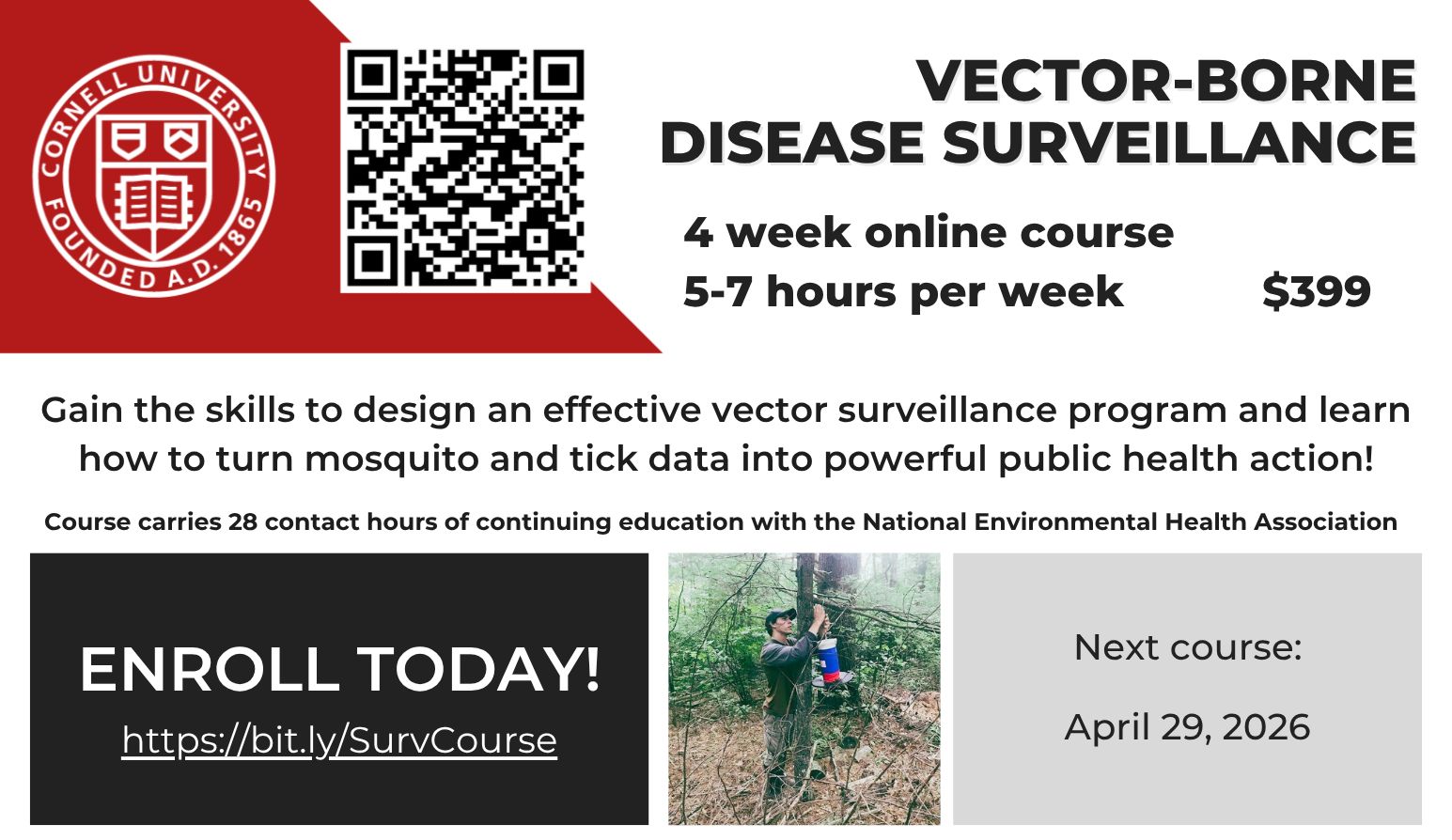
Introduction to Mathematical Models of the Epidemiology & Control of Infectious Diseases Short Course Available at Imperial College
This interactive short course for professionals is taught by leading researchers who inform policymakers internationally. The course is directed by Dr Anne Cori and topics include HIV, TB, malaria, Ebola, COVID-19, health economics, vaccination programmes, stochastic models and more.
The course has been taught since 1990 by leading researchers in infectious disease epidemiology, who provide a thorough, but accessible and demystifying introduction to the essential elements of modelling and an update of the most practically-relevant aspects of this fast-moving field. The course is revised every year to reflect the most recent developments in the field. Diseases covered include COVID-19, avian influenza, SARS, HIV, TB, Influenza A (H1N1), Ebola, malaria and other vector-borne diseases. Past participants have included hospital clinicians, public health executives, health economists, veterinary researchers, biologists, and mathematicians who have come from 42 countries.
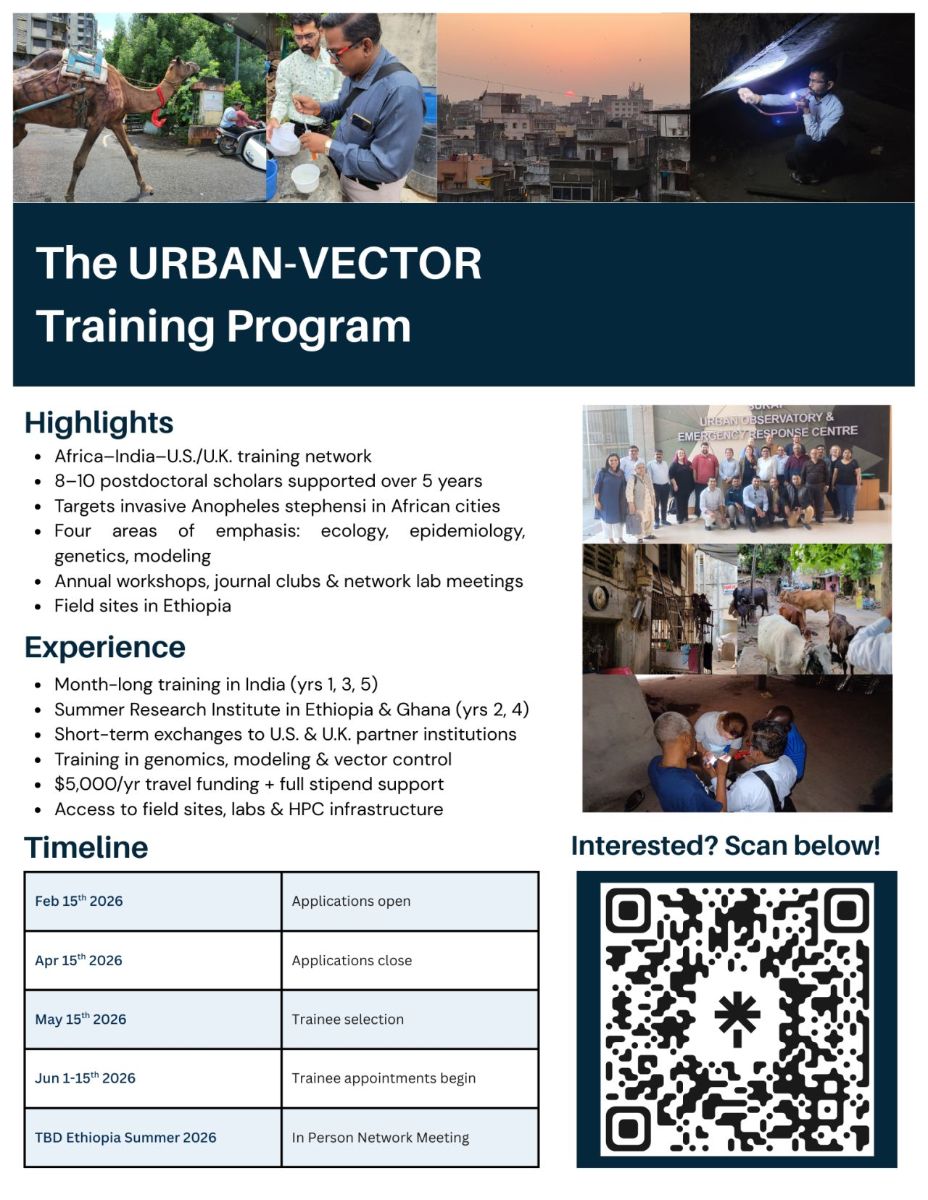
The 29th Johns Hopkins Malaria Research Institute Vector Encounter
The 29th Vector Encounter is a two-day gathering hosted by the Johns Hopkins Malaria Research Institute in Baltimore, Maryland, to discuss the biology of disease vectors and the latest research driving this exciting field.
This year's Vector Encounter takes place on Thursday and Friday, May 28 and 29, 2026. During this engaging get-together, investigators present their labs' latest vector research in Chalk Talk and Short Talk formats, emphasizing ideas and latest discoveries. Chalk Talk presentations in the main session are limited to one investigator per lab, by the PI or a team member. Non-PIs can also present research in Short Talk format in a breakout session; more than one lab member can present
Subgroups, Working Groups, and Regional Activities
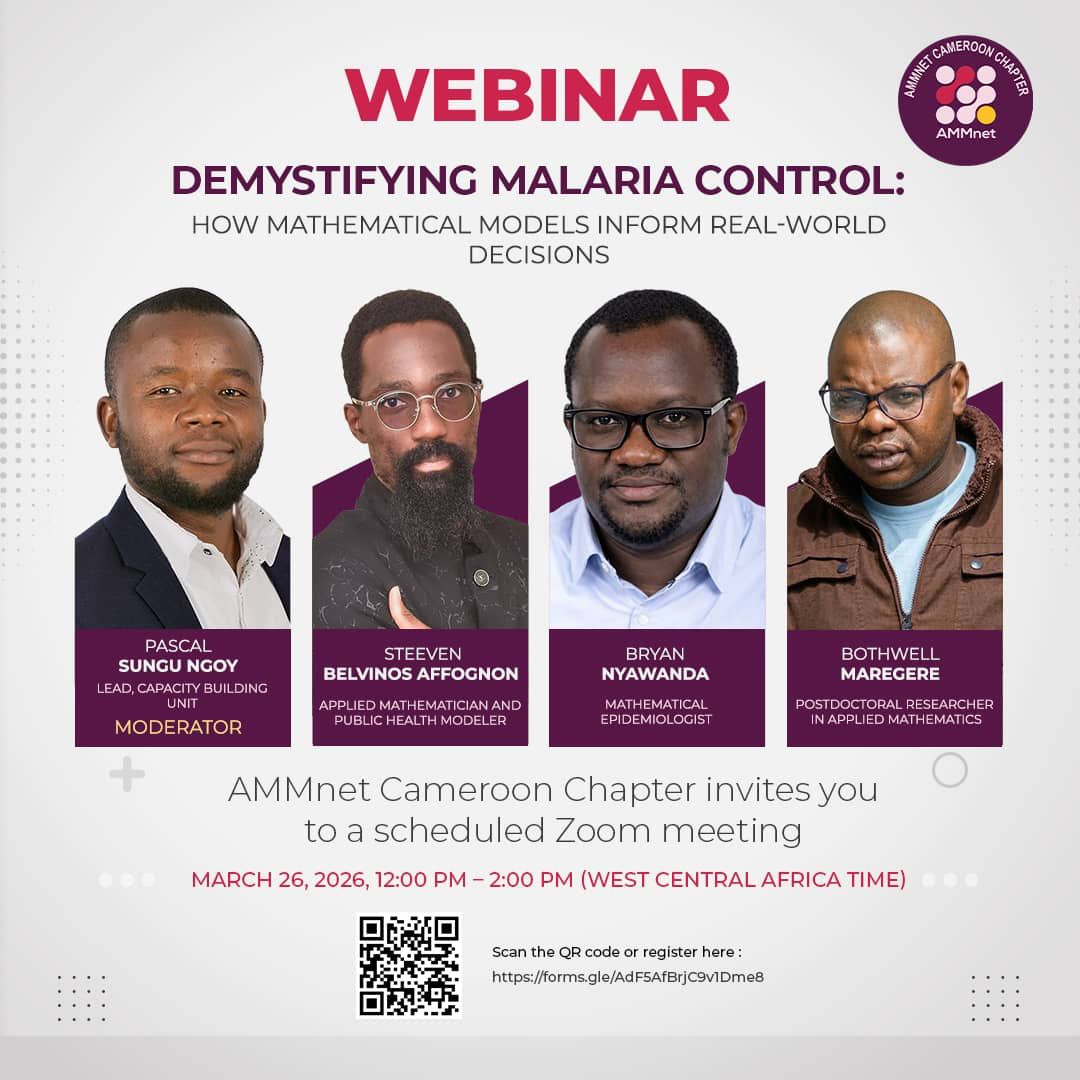
AMMnet Cameroon Chapter
Member Reading Corner
If you'd like to share a paper or any other publication with the AMMnet community, send an email to info@ammnet.org and we will consider including it in the newsletter.
Seminar Recap and Recordings
AMMnet Seminar Series
March 03, 2026, 15 hr UTC
Incorporating Environmental Determinants of Malaria into Predictive Models for Decision Support
Presenter: Dr. Michael C. Wimberly
The seminar described the development and implementation of the EPIDEMIA (Epidemic Prognosis Incorporating Disease and Environmental Monitoring for Integrated Assessment) system in Ethiopia. Building on research into environmental modeling of malaria across different regions of Ethiopia, the EPIDEMIA system uses a range of data sources, including temperature, precipitation, vegetation indices, and epidemiological surveillance data, to forecast whether malaria epidemics are likely to occur across Ethiopia's districts